
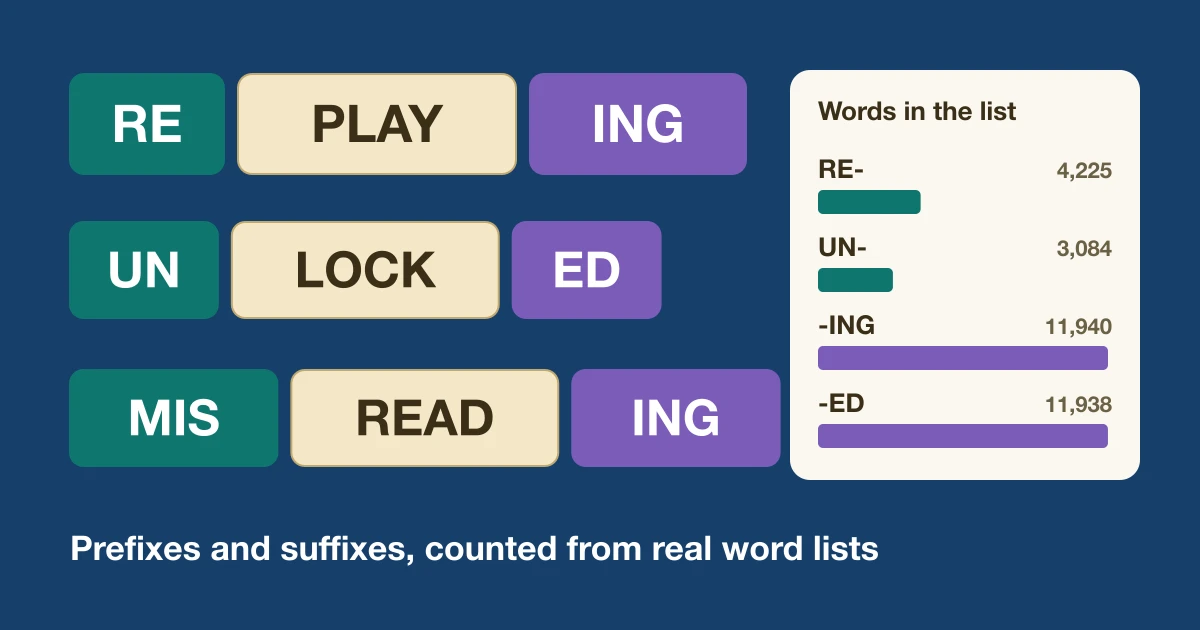
Most lists of prefixes and suffixes come from school reading lessons. They tell you what un- means. They don't tell you which endings turn up on a Wordle board, or which front pieces get you a seven tile play in Scrabble.
So we counted. We ran three kinds of real word lists through one script: the ENABLE list that many word games use (172,823 words), the 20,000 English words people use most, and the words from real daily puzzles (2,343 Wordle answers and every Pairdle board word from 28 October 2025 to 24 September 2026). The numbers below all come from that script.
Prefix, suffix and stem in plain words
A prefix goes on the front of a word: RE + PLAY makes REPLAY. A suffix goes on the end: PLAY + ER makes PLAYER. The word in the middle is the stem. "Affix" is the word that covers both.
One stem can carry a lot. With common prefixes and suffixes, PLAY grows into 25 words in the ENABLE list.
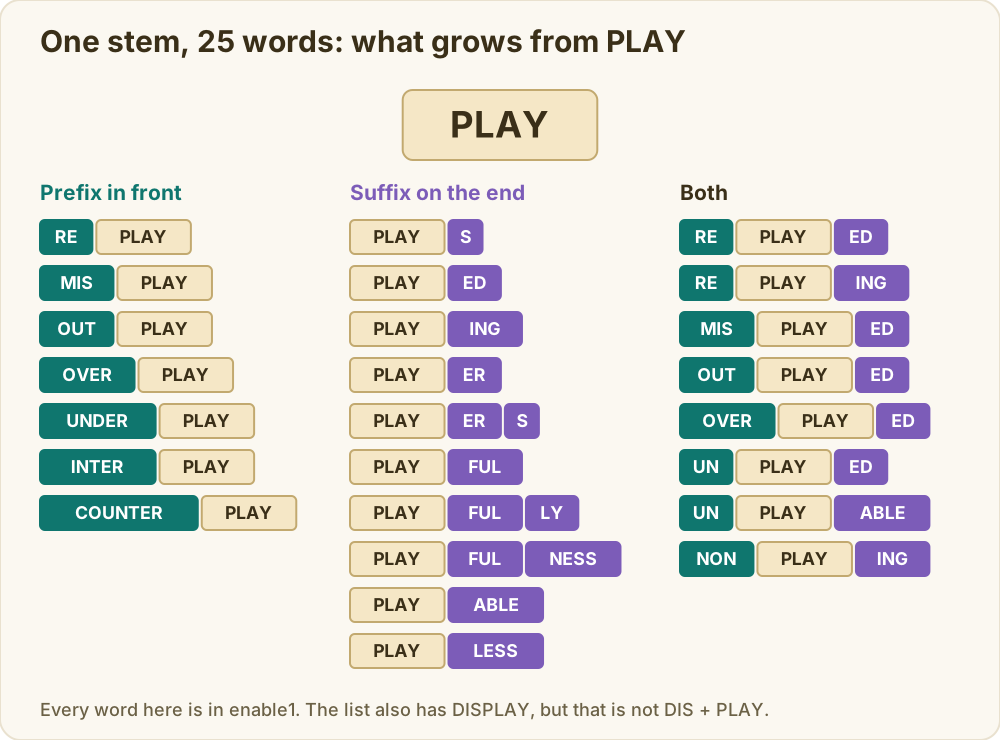
If you can see the stem, the rest of a long word is a short list of known pieces.
How we counted, and why RE in READ does not count
A lazy count would say every word starting with R-E has the prefix RE. That counts READ, REAL and RED. So we used a stem check: a word only counts if the part left after the affix comes off is itself a word of at least three letters. REPLAY passes (PLAY). READ fails (AD is too short, and it isn't RE + a word anyway).
For suffixes we let the usual spelling changes through. MAKING counts as MAKE + ING, RUNNING as RUN + ING, and HAPPINESS as HAPPY + NESS.
Here is how much the check throws out.
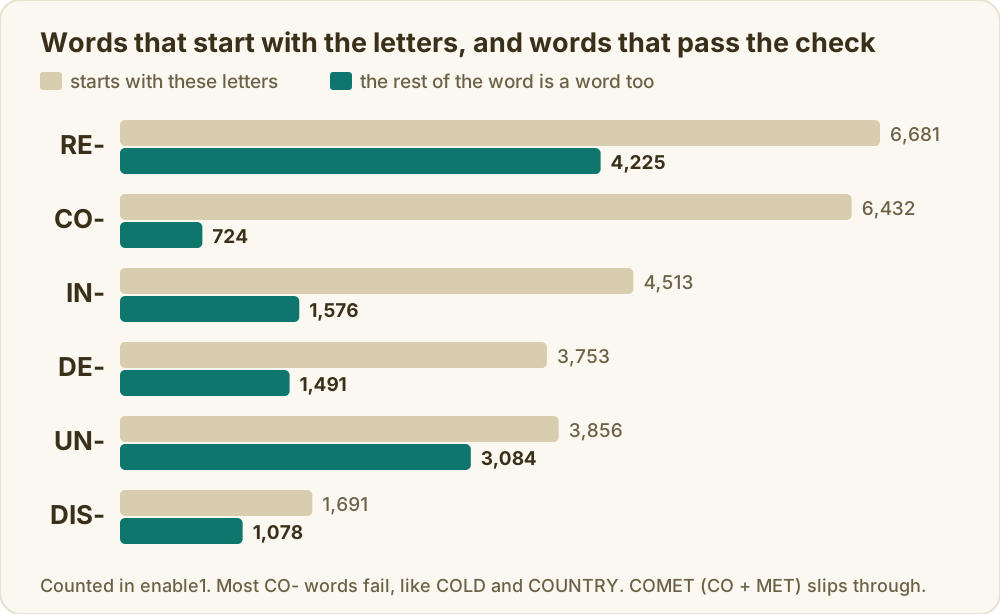
CO is the big surprise. 6,432 words start with C-O, but only 724 are CO + a word, like COAUTHOR or COSIGN. The rest are words like COLD and COUNTRY. IN drops by about two thirds too, because INCH, INFANT and INNER leave no word behind.
The check is a filter, not a proof. RECENT still passes as RE + CENT, COMET as CO + MET and MOTHER as MOTH + ER. So read the counts as close, not exact.
The top 10 prefixes and suffixes
These are the biggest ten of each in the ENABLE list after the stem check.
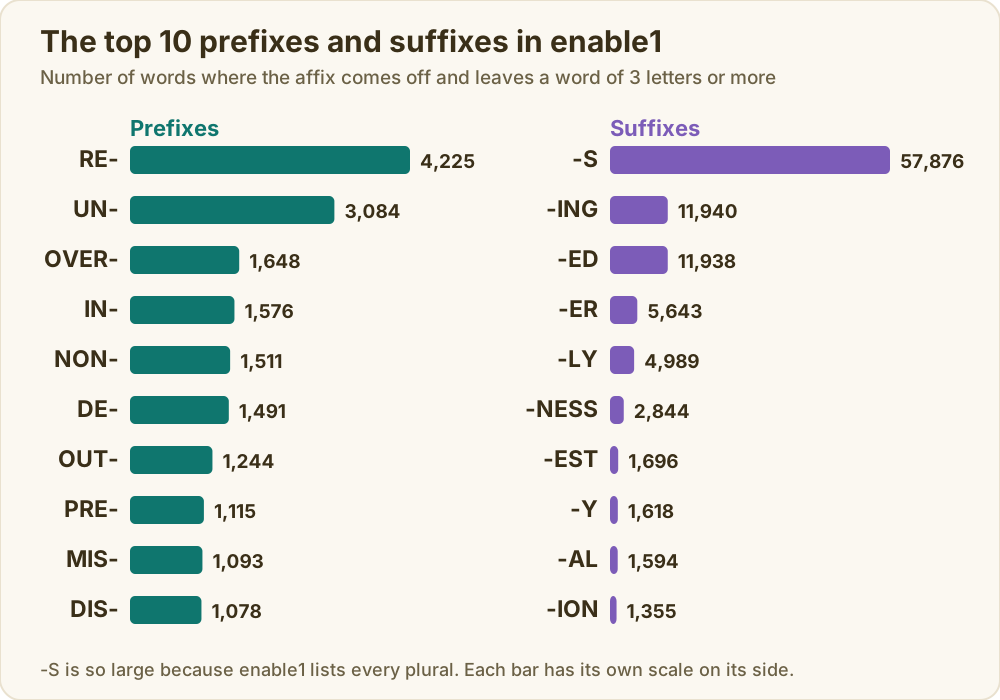
The table adds a second count: how many of the 20,000 most used English words carry the same affix. That count comes from a list of how often each word shows up on the web, keeping only words that are also in ENABLE.
| # | Prefix | Words in ENABLE | In the 20,000 most used | Suffix | Words in ENABLE | In the 20,000 most used |
|---|---|---|---|---|---|---|
| 1 | re- | 4,225 | 393 | -s / -es | 57,876 | 4,301 |
| 2 | un- | 3,084 | 142 | -ing | 11,940 | 1,397 |
| 3 | over- | 1,648 | 38 | -ed | 11,938 | 1,472 |
| 4 | in- | 1,576 | 179 | -er | 5,643 | 640 |
| 5 | non- | 1,511 | 7 | -ly | 4,989 | 392 |
| 6 | de- | 1,491 | 162 | -ness | 2,844 | 51 |
| 7 | out- | 1,244 | 42 | -est | 1,696 | 52 |
| 8 | pre- | 1,115 | 58 | -y | 1,618 | 251 |
| 9 | mis- | 1,093 | 15 | -al | 1,594 | 317 |
| 10 | dis- | 1,078 | 98 | -ion | 1,355 | 427 |
Two things stand out.
The game list is packed with words nobody says. NON has 1,511 words in ENABLE (NONSTOP, NONFAT, and a long tail like NONMETRO). Only 7 of them make the 20,000 most used. OVER, MIS and NESS show the same gap. In games that accept a big list like ENABLE, those long tails are legal and worth knowing. In a daily puzzle with a picked answer, they almost never come up.
The common words tell a different story. Among the 20,000 most used, the top prefixes run RE (393), IN (179), DE (162), UN (142) and DIS (98). The top suffixes run S, ED, ING, ER, then ION (427), which jumps from tenth to fifth. Everyday English leans on -ION words like ACTION and ELECTION far more than the game list does.
Which endings show up in real daily puzzles
Puzzle answers are picked by people, so they follow their own rules. We counted the last two letters of every word.
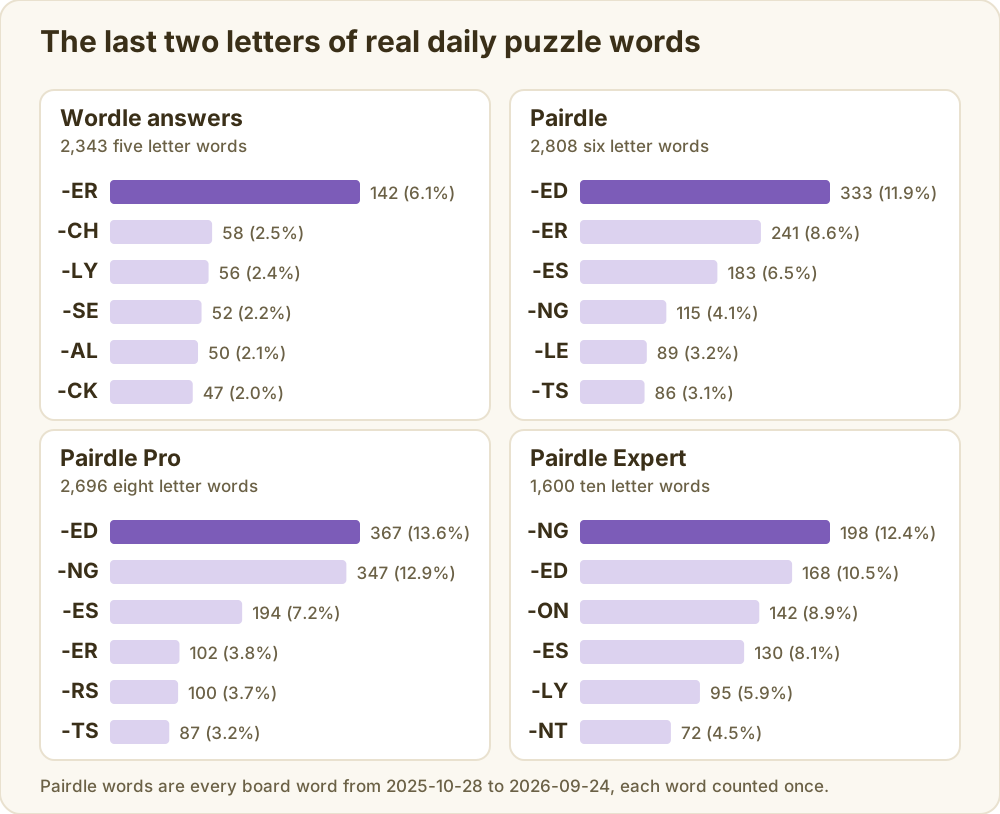
Wordle has one ending far ahead of the rest. 142 of the 2,343 answers end in ER, which is 6.1%. The next one, CH, is at 58. Wordle keeps almost all plurals out of its answer list (we covered that in why Wordle hates the letter N), so -S and -ED are rare there.
Pairdle is the opposite. Its words are 6, 8 and 10 letters long, and past tense and -ING words are everywhere:
- 6 letters: ED ends 333 of 2,808 words (11.9%), then ER at 241.
- 8 letters (Pro): ED ends 367 of 2,696 (13.6%), NG ends 347 (12.9%). All but one of those 347 NG words end in ING.
- 10 letters (Expert): NG leads at 198 of 1,600, then ED at 168 and ON at 142. Of those 142, 109 end in TION and 27 in SION.
Using an ending to narrow a Wordle guess
Say your first guesses turn E and R green in the last two spots. You now know the answer is one of these 142 words.
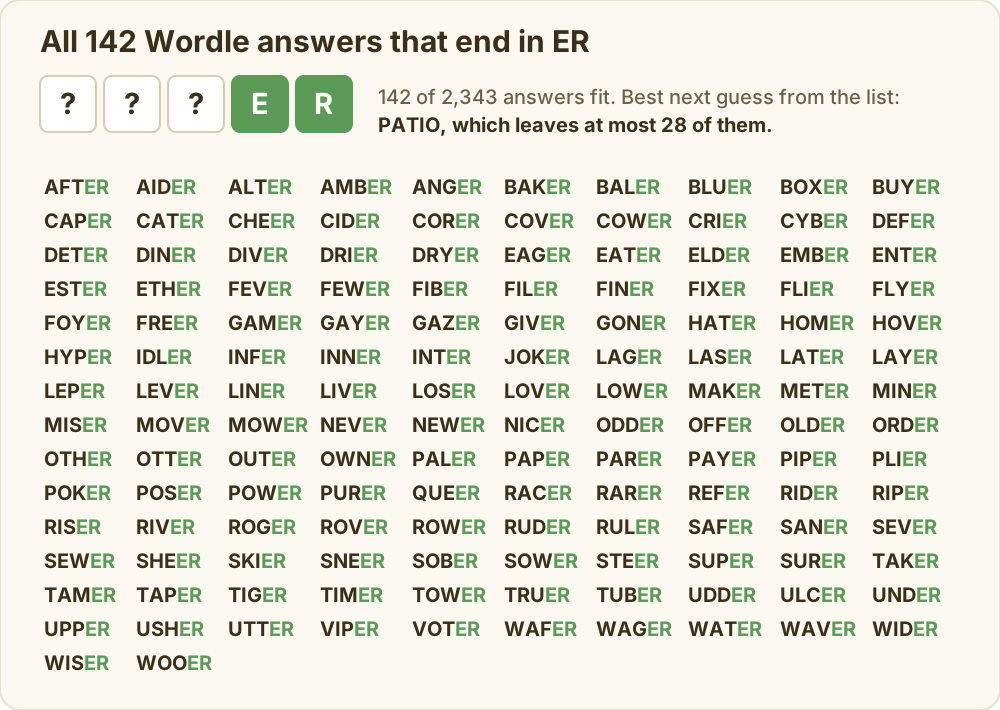
The trap is to keep guessing ER words one at a time: POWER, then LOWER, then TOWER. Each guess only tests three new letters in the front, and there are dozens of ER words.
A better move is a guess that tests the front letters and ignores the ending. The most common letters in the first three spots of these words are A (35 words), I (33) and O (33). We tested every Wordle answer as a follow-up guess. PATIO does best: whatever colours come back, no more than 28 of the 142 words are left. It can't be the answer, but it cuts the list to a size you can think through.
The same idea works for any ending you have locked. Once the ending is known, spend a guess on the letters in front of it.
Using endings in Pairdle
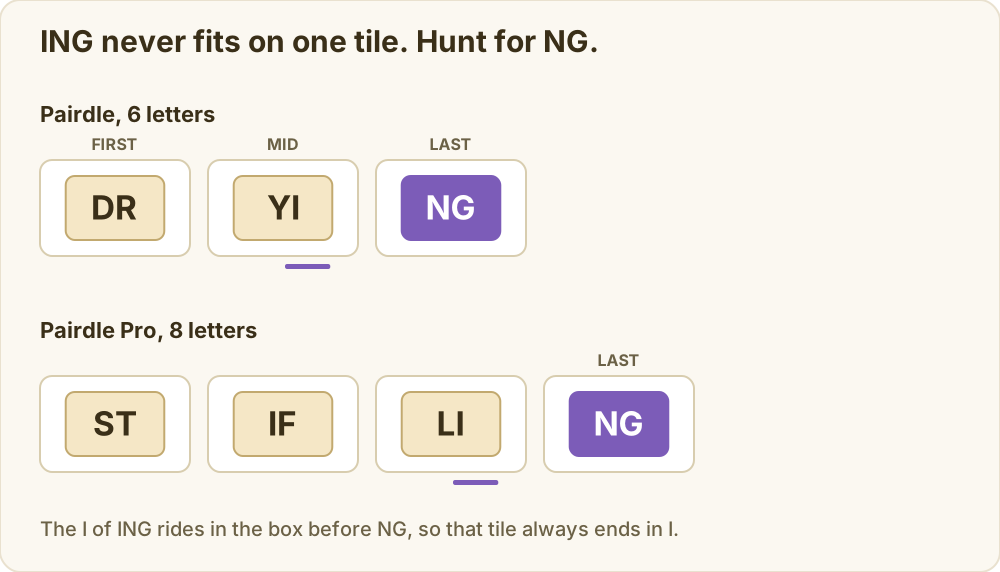
In Pairdle you build the word from letter-pair tiles, one pair per box. The last box always holds the last two letters of the word. So the endings from the chart above are whole tiles: ED, ER, ES, NG.
Two tips from the counts:
- On a 6-letter board, try ED or ER in the last box early. Together they end 574 of the 2,808 words, about one in five.
- ING never sits on one tile, because tiles hold two letters. DRYING splits DR-YI-NG, and on Pro STIFLING splits ST-IF-LI-NG. So the tile to hunt for is NG, and the pair in the box before it will end in I.
The front box follows the same pattern from the other side. RE is the most common first pair on both the 6-letter boards (81 words) and Pro (140 words).
Scrabble bingos: ING, ERS, RE and UN
A bingo in Scrabble means playing all seven tiles in one turn, which earns a 50 point bonus. Affixes are the fastest way to find one, because they take three or four tiles off the problem.
In the ENABLE list, 1,488 of the 23,109 seven-letter words are a stem + ING. 901 end in ERS, 495 start with RE and 308 start with UN. At eight letters the counts are 1,937 for ING, 1,009 for ERS, 694 for RE and 540 for UN.
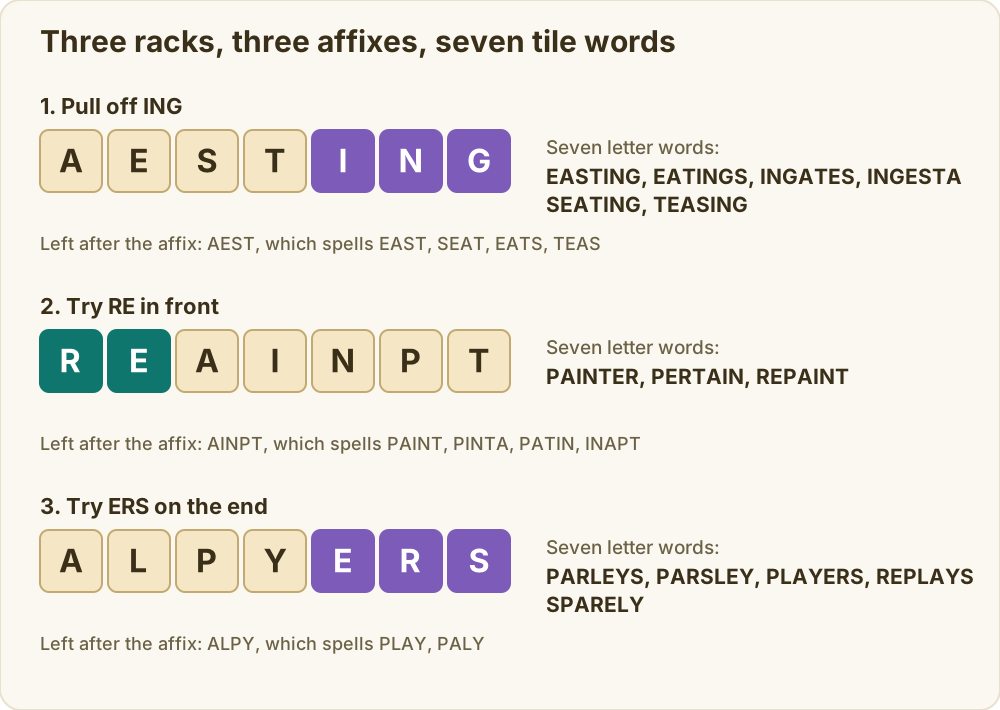
Work each rack the same way. Set the affix tiles to one side, then ask what the leftover letters spell.
With A E G I N S T, pull off ING and you have A, E, S, T. Those spell EAST, SEAT and EATS, which gives EASTING, SEATING and EATINGS. TEAS gives TEASING. With A E I N P R T, put RE in front and you have PAINT: REPAINT. Now try the same letters with ER at the end, and PAINT gives PAINTER too. With A E L P R S Y, ERS leaves A, L, P, Y, which spells PLAY. That gives PLAYERS, and RE on the front gives REPLAYS.
Once you have found one word, look for the others with the same tiles. Different words fit different spots on the board. Our list of Scrabble words that win games covers the short words you need to fit a bingo in.
Practice
Try these before you open the answers. Every answer comes from the ENABLE list.
Rack: A E G I N R T. Pull off ING. What seven-letter word is left?
TEARING (TEAR + ING). The same tiles also make GRANITE, INGRATE, TANGIER and GRATINE.
Rack: A C E L N R U. There is an UN word in here.
UNCLEAR (UN + CLEAR). NUCLEAR uses the same tiles but is not UN + anything. LUCARNE, a kind of roof window, is the third word.
How many words can you build from LOCK using only the prefixes and suffixes in the table?
Our script found 23: LOCKS, LOCKED, LOCKING, LOCKER, LOCKERS, LOCKABLE, UNLOCK, UNLOCKS, UNLOCKED, UNLOCKING, RELOCK, RELOCKS, RELOCKED, RELOCKING, INTERLOCK, INTERLOCKS, INTERLOCKED, INTERLOCKING, ANTILOCK, FORELOCK, FORELOCKS, FORELOCKED and FORELOCKING. FORELOCK passes the stem check but is a false friend: it means the hair on your forehead, not "lock ahead of time".
Where to go next
When we counted which words have the most anagrams, S, R and E came out on top, the same letters that make these endings. Endings help in Spelling Bee too: when the letters include I, N and G, check every word you find to see if it also takes ING. For the two-letter chunks inside words, see common letter pairs in English. Our spelling and vocabulary games roundup has more places to use all of this.
Related articles
How to Play Spelling Bee: Rules, Scoring and a Worked Puzzle
Spelling Bee rules and scoring in plain words, then one puzzle of our own solved step by step, plus what 55,818 of our puzzles say about the middle letter.
The 10 Best Spelling and Vocabulary Games in 2026
From NYT Spelling Bee to classic spelling tests gone digital, these are the 10 best games for building vocabulary and sharpening your spelling.
Chronicles: The Story Under the Epic Words Puzzle
How the Chronicles layer of Epic Words works — when an Encounter interrupts, why some choices permanently close a path, what the Journal records, and how the Echo Stone lets you replay a finished Chronicle.