Pairdle: The Next Evolution of the Word Game
If you've played Wordle, you know how a daily word puzzle feels. Pairdle keeps the one word a day and the six guesses, but changes what you guess with. You don't type letters at all. You build the word out of two-letter tiles, which makes you read in pairs instead of single letters. Tim Nye calls the result “Word Sudoku.”
This page covers Pairdle as it plays today, in version 1.5. If you played the first version, with its bigger boards and three tiers, the last section explains what changed.
The concept
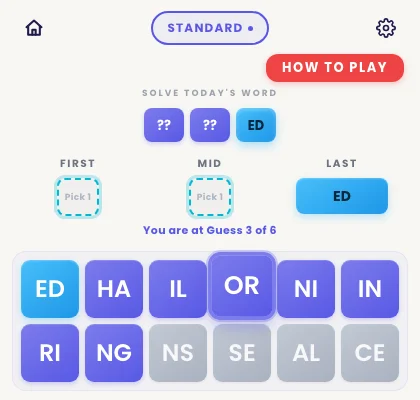
Today's answer is a six-letter word. Above the tiles sit three boxes, FIRST, MID and LAST, and each box takes one tile. Tapping a tile sends it to the first empty box. You can also drag it where you want it, and tapping a full box sends its tile back down. GUESS only lights up once all three boxes hold a tile, so you can't send half a word by mistake. You get six guesses.
How a board is built
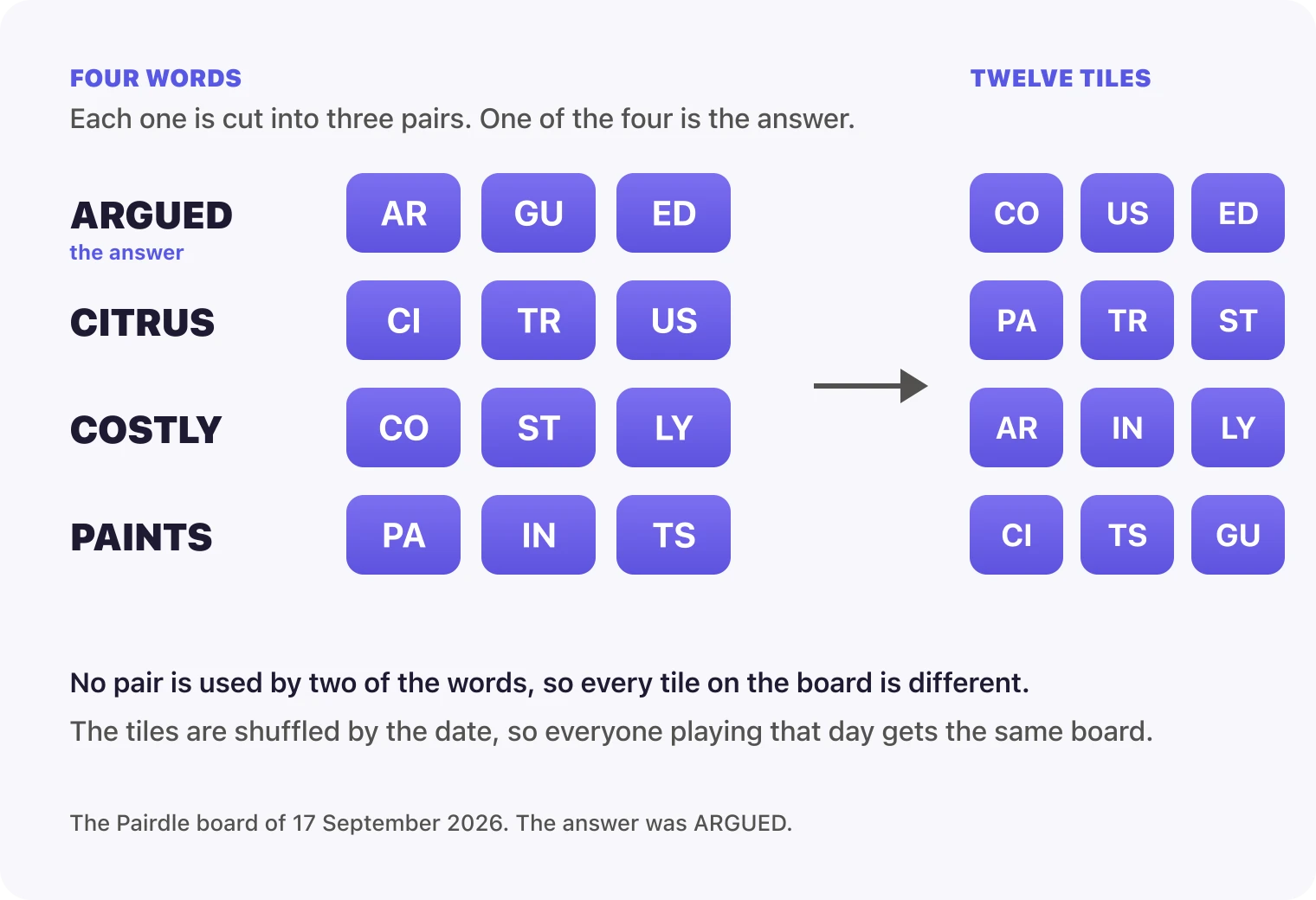
Every board starts as four real six-letter words from that day's list. Each word is cut into three pairs, which gives twelve tiles. The four are picked so that no pair turns up in two of them, so every tile on the board is different. One of the four is the answer. The other three are there to mislead you, and because they are real words, they do.
The tiles are then shuffled into an order set by the date. Everyone who plays that day, on the web, iPhone or Android, sees the same twelve tiles in the same places.
One board, more than one real word
The decoys do more than fill space. Their pairs mix. The 17 September board spells eleven six-letter words from the word list Pairdle's solver uses: the four it was built from, plus COINED, COUSIN, PAINED, PAUSED, STARED, STARTS and TRUSTS. COUSIN takes CO from COSTLY, US from CITRUS and IN from PAINTS.
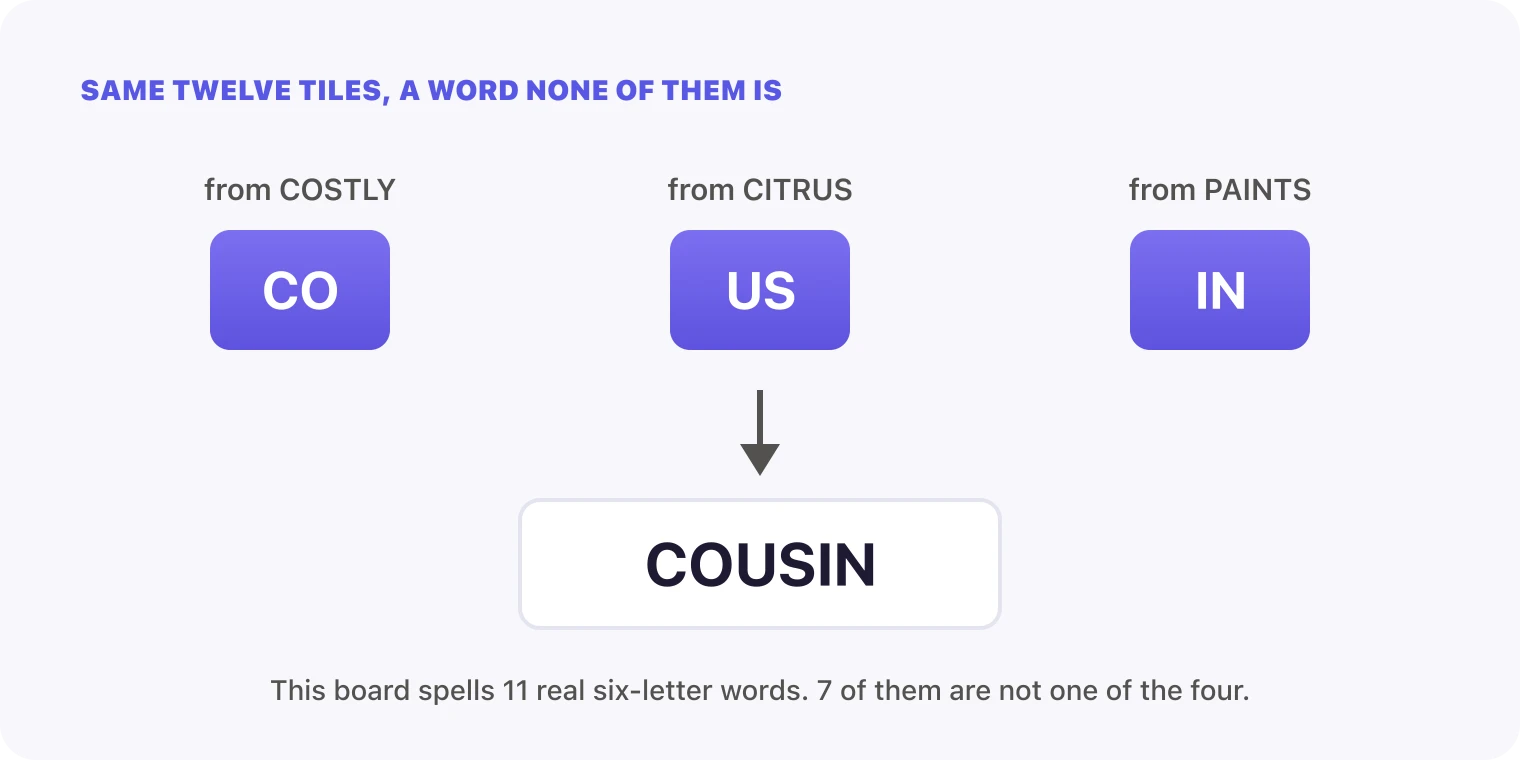
So spelling a real word is not the same as finding today's word. A wrong real word still tells you a lot, though, and that is what the colours are for.
What the colours tell you
Press GUESS and each tile in the boxes changes colour. Blue is a pair sitting in its correct box, and it stays put for the rest of the game. Red means the answer uses that pair, just in another box. Grey means the answer does not use it anywhere.
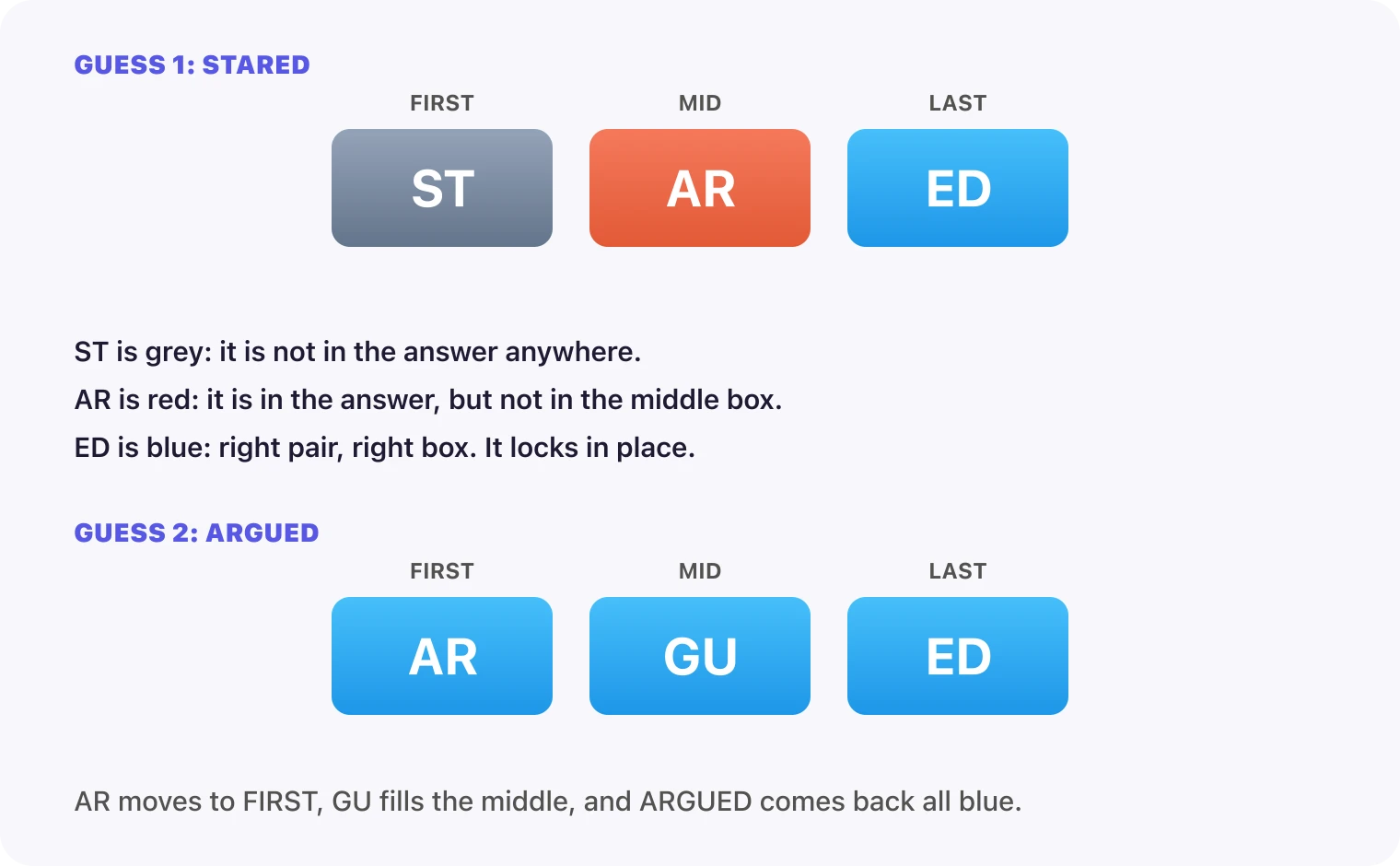
Here is the 17 September board played out. STARED is a real word and a fair first guess. It comes back with ST grey, AR red and ED blue. ED is now locked in LAST. AR belongs somewhere else, MID is out and LAST is taken, so AR has to open the word. Only the middle box is left, and ARGUED comes back all blue on guess two.
Three levels, every day
Pairdle has three levels, and each one is a longer word. Every level gets its own board each day, and all three reset at midnight Pacific time.
- Pairdle: six letters, three boxes, 12 tiles.
- Pairdle Pro: eight letters, four boxes, 16 tiles.
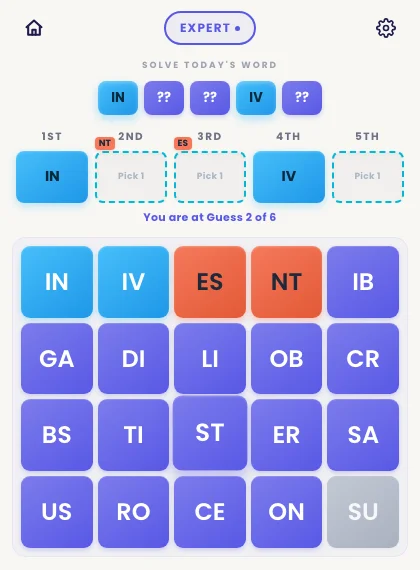
- Pairdle Expert: ten letters, five numbered boxes, 20 tiles.
All three are built the same way, from four words of that length, and all three give you six guesses. The home screen shows them as a ladder: finish Pairdle and Pro is next, then Expert.
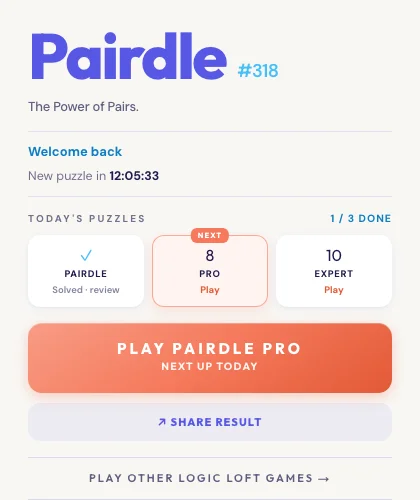
A bigger board is not a fuller one. Across every scheduled day, the average Pairdle board holds about six real words, and the average Expert board holds fewer than five, even with eight more tiles. Ten-letter words share far fewer pairs with each other, so an Expert board can look crowded and still leave you very little to try.
Pro is free for everyone, on the web and in the apps. If three boards a day is not enough, Practice deals unlimited random boards at any level. Nothing you play there touches your streak or your stats.
Where Pairdle started
Pairdle launched in February 2026 with a bigger board. Each day was built from eight words cut into 24 tiles, and the easiest tier showed two stacked rows of boxes with a choice to make at every position. There were three tiers a day, Standard, Challenge and Championship, and the same three again for Pro. New players read the two rows as two separate puzzles.
Version 1.5, out in September 2026, cut all of that down to one row and one board per level, and added Expert, Practice and Olly the owl, who walks new players through their first board. What's new in Pairdle 1.5 has the full list and the numbers behind it. For how the game got started in the first place, read How I built Pairdle.
Each day we also post a recap of the day before: the Standard, Pro and Expert boards, every guess with its colours, and a short video of the solve. They are all on the Pairdle recaps page.