
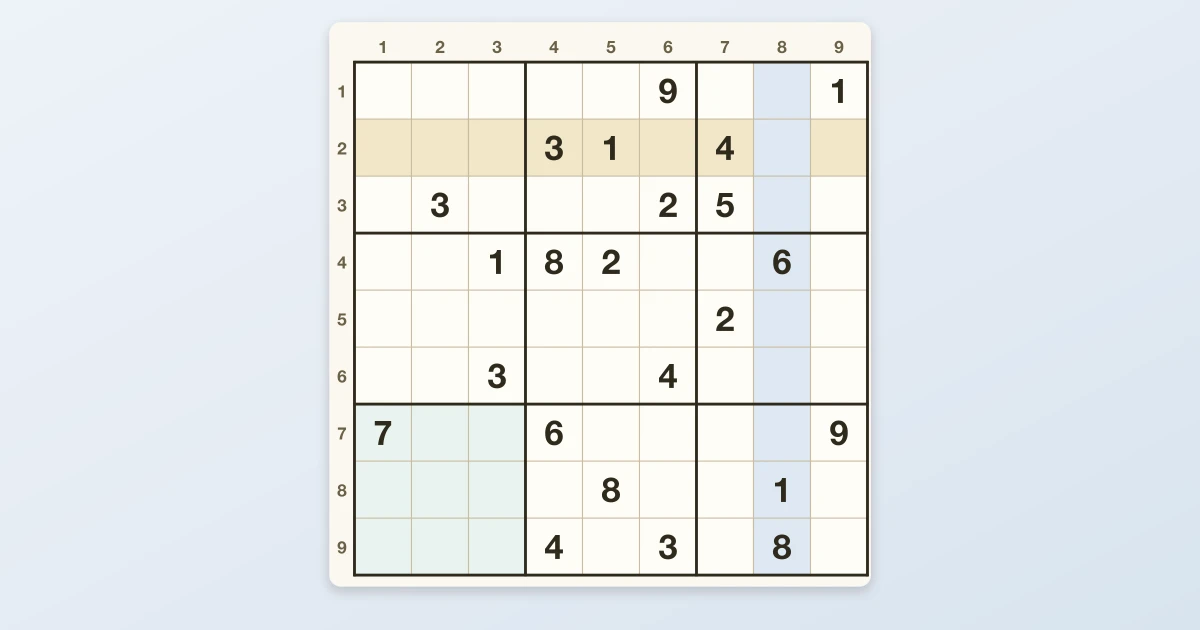
Sudoku looks like a math puzzle, but you never add or multiply anything. The digits 1 to 9 are just nine different symbols. You could swap them for nine colors or nine animals and the puzzle would work the same way. What you need is logic: working out what must be true from what you can already see. This guide starts with the rule and ends with the moves that will get you through your first dozen puzzles.
All four pictures below use the same puzzle. Our own program made it and checked that it has exactly one solution.
The one rule
A Sudoku grid has 9 rows and 9 columns, split into nine boxes of 3 by 3 cells. Some cells start with a digit in them. These are the clues. You fill in the rest so that:
Every row, every column and every 3×3 box holds the digits 1 to 9, each exactly once.
That is the whole game. It is the same rule Nikoli publishes. Nikoli is the Japanese puzzle magazine that gave Sudoku its name in the 1980s. No digit can appear twice in any row, column or box, and everything else in this guide follows from that.
How to read the grid
Every cell belongs to three groups at once: its row (the 9 cells across), its column (the 9 cells down) and its box (the 3 by 3 block around it). Rows are counted from the top and columns from the left. Boxes are counted left to right, then top to bottom, so box 1 sits top left, box 3 top right and box 7 bottom left.
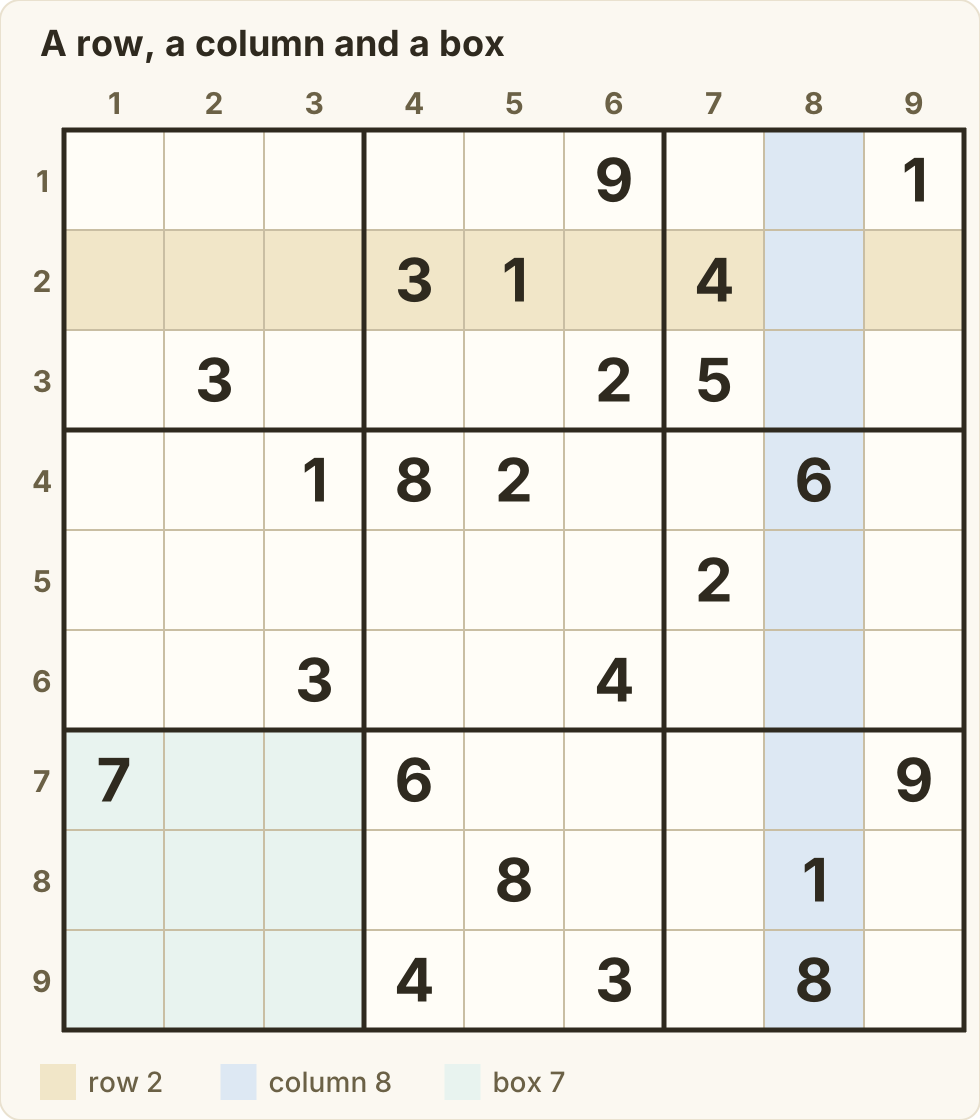
Any digit you write has to be allowed in all three of its groups. So the question for an empty cell is: which digits are still missing from its row, its column and its box? Only those can go there.
A well-made Sudoku has exactly one solution, and you can reach it by logic alone. You never need to guess. If you feel stuck enough to guess, there is almost always a move you haven't spotted yet.
Technique 1: Scanning for the obvious
The quickest way to start is scanning, sometimes called cross-hatching. Pick one digit and find every place it already sits. Each copy rules out its whole row and its whole column. Then look at a box that doesn't have that digit yet. If all its empty cells but one are ruled out, the digit goes in the one cell left.
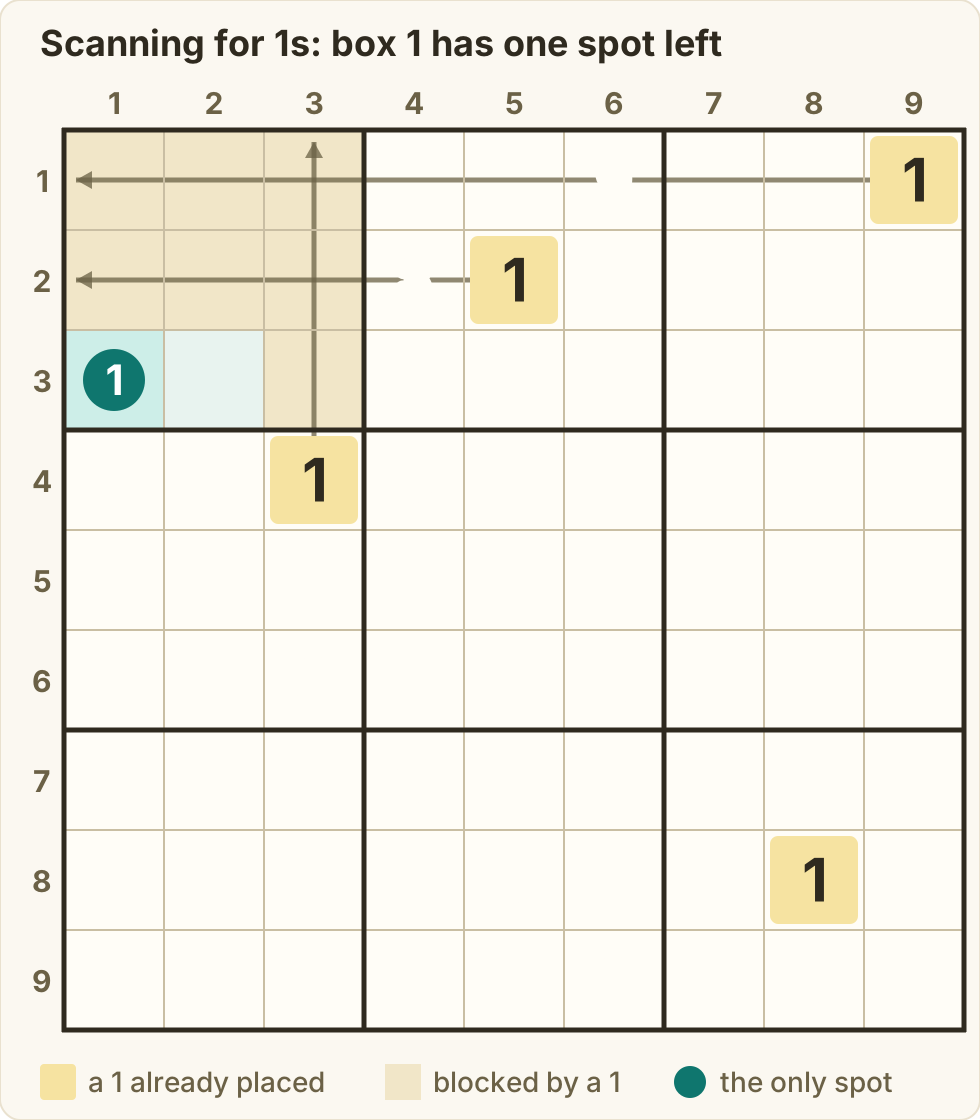
Here we scan for 1. The 1 in row 1 rules out the top row of box 1. The 1 in row 2 rules out its middle row. The 1 in column 3, just below the box, rules out its right-hand column. One empty cell is left, at row 3, column 1, so that is where the 1 goes.
Work through the digits 1 to 9 this way. On an easy puzzle, scanning alone can fill most of the grid.
Technique 2: The "last empty cell"
When a row, column or box has eight of its nine cells filled, the last cell must hold the missing digit. These are free moves. Each time you write a digit, glance along its row, down its column and around its box to see if you just left one of them with a single gap.
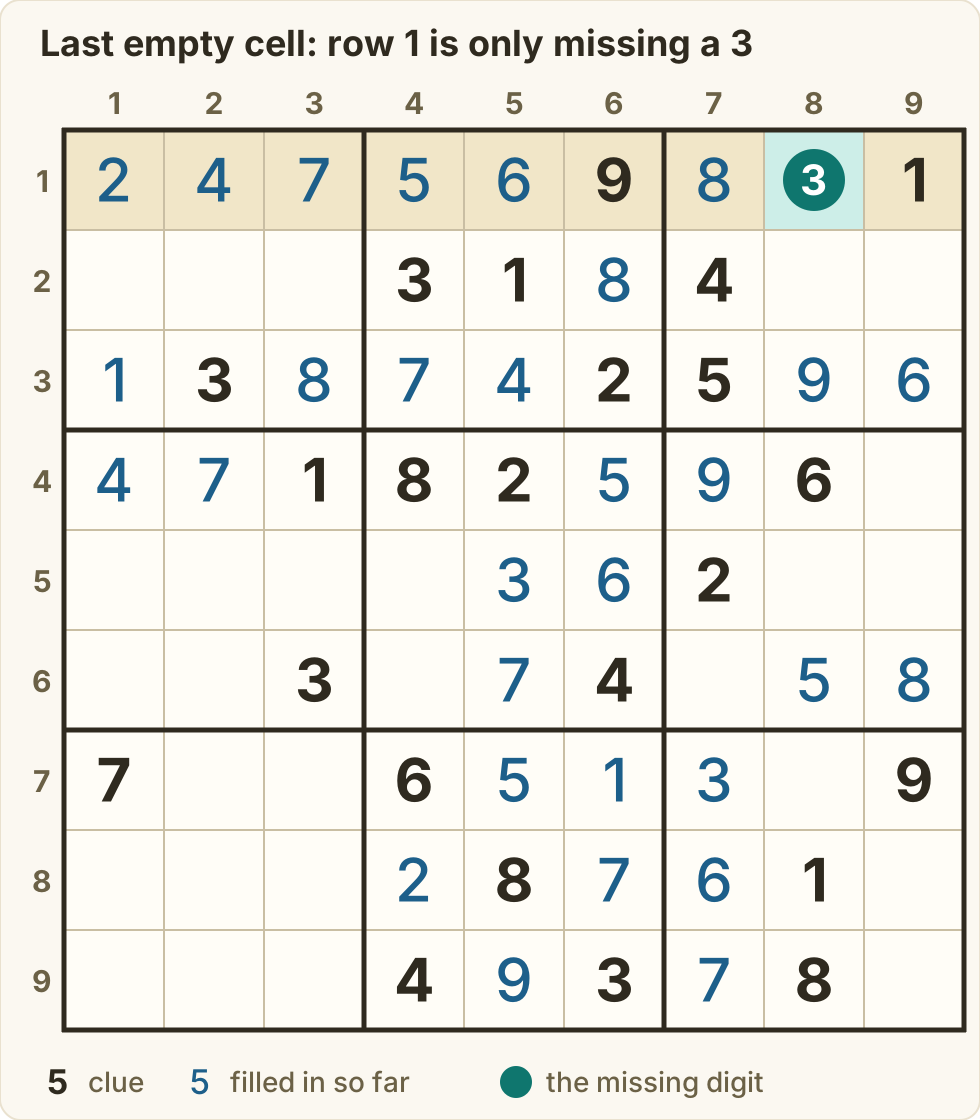
In this picture, row 1 has 2, 4, 7, 5, 6, 9, 8 and 1. The only digit it lacks is 3, so the gap at row 1, column 8 is 3. Each digit you place tends to open up the next free move, so a good run can fill a lot of cells quickly.
Technique 3: Pencil marks (candidates)
When scanning stops giving you digits, switch to pencil marks. In each empty cell, write small the digits that could still go there. These are also called candidates. Now the puzzle shows you its options instead of making you hold them in your head, and two kinds of move become easy to see:
- A cell with only one pencil mark left gets that digit. This is called a naked single.
- A digit that fits in only one cell of a row, column or box goes in that cell, even if the cell has other marks. This is called a hidden single.
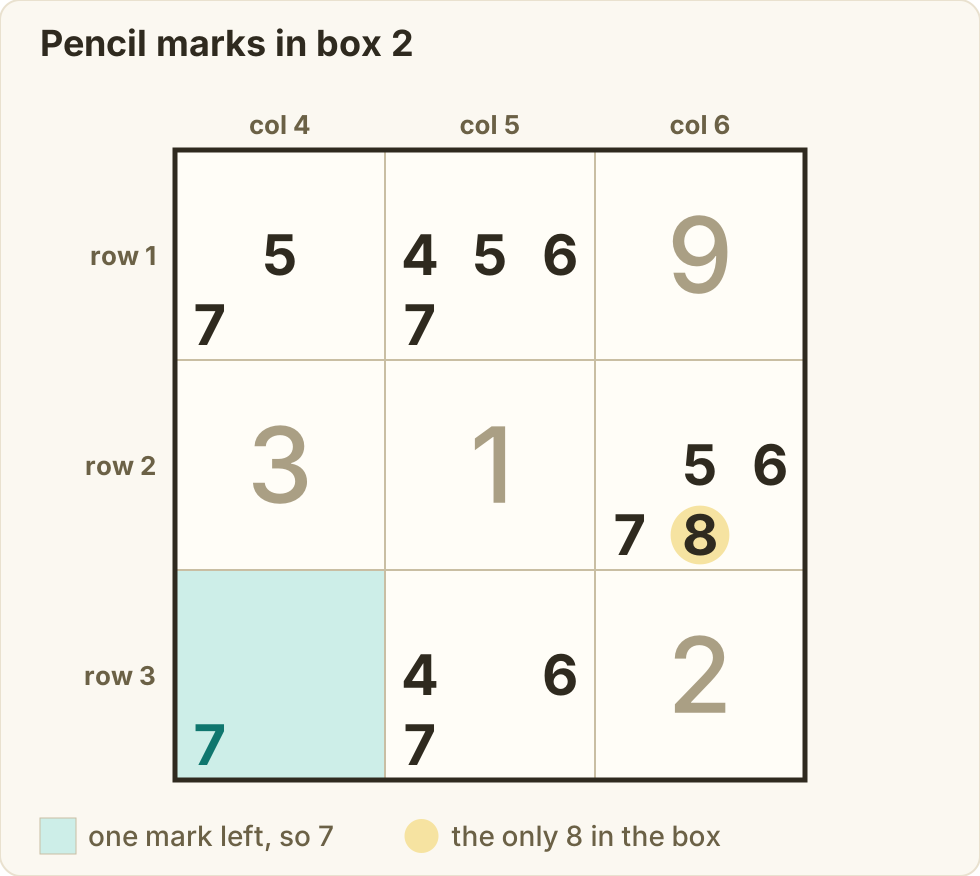
Both kinds are in this box. The green cell at row 3, column 4 has only a 7 left, so it is a naked single. Now look for 8s. Only one cell in the box, row 2, column 6, can take an 8. It also shows 5, 6 and 7, but the box has to put its 8 somewhere, so this cell is 8. That is a hidden single.
Hidden singles are the most useful skill to learn after scanning, because they hide in cells full of marks.
A worked mini-example
Say a box has three empty cells, and their pencil marks are {1,4}, {1,4} and {4,8}. The first two cells can only be 1 or 4. Between them they will use up both, so the third cell can't be 4. It must be 8. You have solved a cell without knowing which of the first two is the 1. A lot of Sudoku works like that: you don't need to know everything to be sure of one thing.
Common beginner mistakes
- Guessing. If you want to guess, you have missed a move. Slow down and scan again.
- Not updating pencil marks. Every digit you write removes marks from other cells in its row, column and box. Cross them off straight away, or your notes will be wrong.
- Staring at one box. If a box won't give, scan a different digit across the whole grid. Progress in one place opens up others.
- Forgetting columns. Beginners often check rows and boxes and skip columns. Every cell has all three.
What the technique names mean
Harder puzzles need moves with names. Here are the ten you will meet, from easiest to hardest.
- Naked single: the cell has one possible digit left. The green cell in the pencil marks picture is one.
- Hidden single: some digit has only one possible home in a row, column or box. The yellow 8 in that same picture is one.
- Pointing pair: when a box can only put a digit along one line, the rest of that line loses the digit.
- Box-line reduction: the reverse. When a line can only put a digit inside one box, the rest of that box loses it.
- Naked pair: two cells that share the same two possible digits and nothing more keep both digits for themselves.
- Hidden pair: two digits whose only homes are the same two cells make those cells theirs alone.
- Naked and hidden triples: those two ideas again, with three cells and three digits.
- X-Wing: a digit trapped in the four corners of a rectangle, across two rows and two columns.
- Y-Wing: three cells with two possible digits each that together rule a digit out of any cell touching both ends.
- Swordfish: a bigger X-Wing that uses three rows and three columns.
The last eight each have their own section, under the same name, in our techniques guide, with a picture from a real puzzle and a practice grid.
Why Sudoku is worth the habit
Sudoku trains one skill: keeping several rules in mind at once and finding the cell where they leave only one answer. Word puzzles use the same skill. Our how to play Wordle guide describes the same "rule things out until one is left" thinking, with letters instead of digits.
Once scanning and singles feel easy, you'll meet puzzles that need more. That is where our guide to Sudoku techniques like naked pairs and X-Wing takes over. For more puzzles like this, our roundup of the best Sudoku and number puzzle games is a good place to start. If numbers aren't your thing, a daily word game like Pairdle uses the same kind of thinking.
Related articles
Four Years of Threes!: Why I Can't Get Past 1536
Four years, one 1536 card, and an all-time best of 69,222, of which a single card is 85%. The wall in Threes!, and why the game keeps me playing anyway.
Meowdoku: A Surprisingly Addictive Logic Puzzle
A colorful grid, nine hidden cats, three lives. Meowdoku looks hard at first glance, but the deduction chain that opens it up is pure Sudoku logic.

How to Play Tuba Scuba, the Daily Rhyme Puzzle
Tuba Scuba gives you six funny clues a day, and every answer is a rhyming pair. Learn how the hints, scoring and sister game Mission Ignition work.