
Every Sudoku guide gives you the same list of named techniques. What none of them tell you is how often each one is the move that gets you unstuck. So we counted.
We wrote a small program that makes Sudoku puzzles, checks that each one has exactly one solution, and then solves it the way a person would: one step at a time, always trying the easiest technique first. We ran it on 10,000 puzzles and wrote down which technique made every bit of progress. This page gives you what we found, a flow chart of what to try next, one puzzle solved from start to finish, and a practice grid for every technique.
It assumes you know the rules and already use pencil marks (the small notes of which digits could still go in each empty cell, also called candidates). If you don't, start with our how to play Sudoku guide and come back.
What the names mean
Here are the techniques in the order our solver tries them, one line each. Each one has its own section further down with a picture from a real puzzle.
- Naked single: an empty cell with only one pencil mark left, because its row, column and box already use the other eight digits.
- Hidden single: a digit with just one cell it can go in within a row, column or box, even when that cell has other marks too.
- Pointing pair: inside a box, a digit's only spots lie on one row or column, so that digit can be crossed off the rest of that row or column.
- Box-line reduction: inside a row or column, a digit's only spots sit in one box, so that digit can be crossed off the rest of the box.
- Naked pair: two cells in the same row, column or box that both hold only the same two marks, so no other cell there can use those two digits.
- Hidden pair: two digits that can only go in the same two cells of a row, column or box, so those two cells can drop every other mark.
- Naked triple: three cells in one row, column or box whose marks, put together, come to just three digits, so those digits leave every other cell there.
- Hidden triple: three digits that fit only into the same three cells of a row, column or box, so those cells drop all their other marks.
- X-Wing: one digit with exactly two spots in each of two rows, lined up in the same two columns, so it can be crossed off the rest of both columns.
- Y-Wing: three cells with two marks each, where the middle one sees the other two and between them they force a digit into one of the outer cells, so any cell that sees both outer cells loses that digit.
- Swordfish: the X-Wing idea stretched to three rows and three columns.
In the pictures below, green marks the pattern and a red crossed-out mark is one you can erase.
How we tested
Each puzzle starts as a full, correct grid. The program then takes clues away one at a time, in random order, and puts a clue back whenever taking it away would allow a second solution. What is left has between 20 and 29 clues, 24.4 on average, and a search that tries every possibility confirms it has one answer only.
Then a second program solves it. At every step it tries the techniques in a fixed order and uses the first one that finds something. The order is naked single, hidden single, pointing pair, box-line reduction, naked pair, hidden pair, naked and hidden triples, X-Wing, Y-Wing and Swordfish. After each move it starts again at the top. If nothing on the list works, the puzzle counts as too hard for this list. The puzzles are not picked for difficulty. A newspaper's "hard" puzzle is usually chosen because it needs the later steps, so expect those more often there.
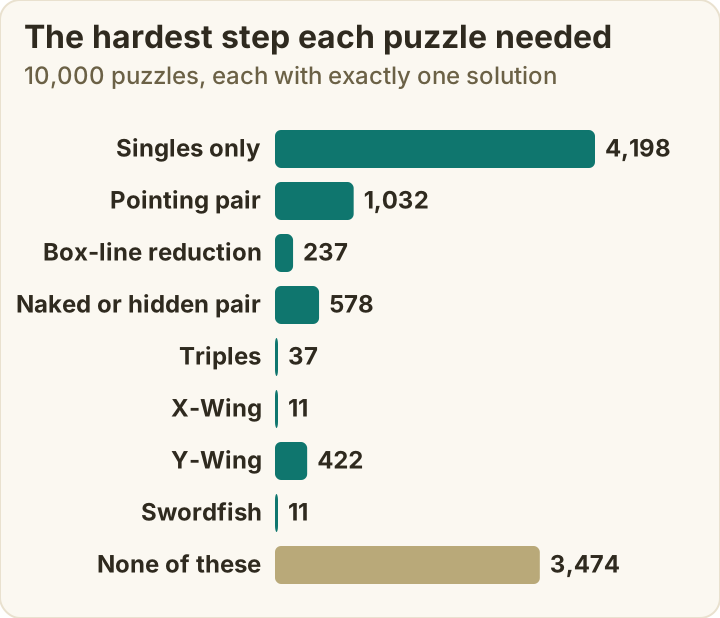
Here is the hardest step each of the 10,000 puzzles needed:
What the numbers say
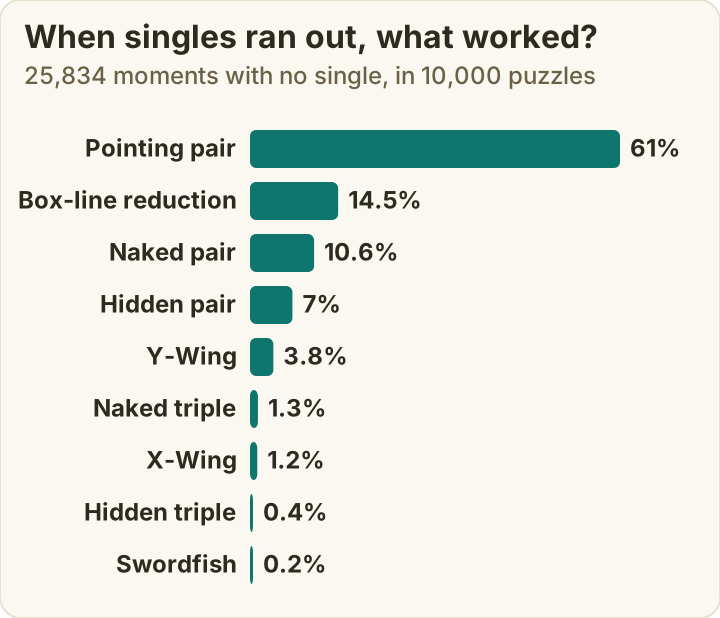
Singles alone solved 4,198 puzzles, 42 in every 100. The rest got stuck at least once. Across all 10,000 puzzles there were 25,834 moments where no single was left anywhere on the grid. We call each one a stall. This chart shows which technique got the solver moving again each time:
Three things stand out.
The pointing pair did 61% of the work on its own. It was needed in 5,246 puzzles, more than half the batch. If you learn one technique past singles, learn this one.
The X-Wing is the famous one, but the Y-Wing was needed far more often: in 863 puzzles against 299 for the X-Wing. On our numbers the Y-Wing is the more useful of the two to learn.
And 3,474 puzzles, about a third, still got stuck with every technique on the list. Those need longer chains of reasoning than this page covers.
What to try next
When you stall, go down this chart from the top. As soon as one question gets a yes, make the move and start again at the top. It is the same order our solver used.
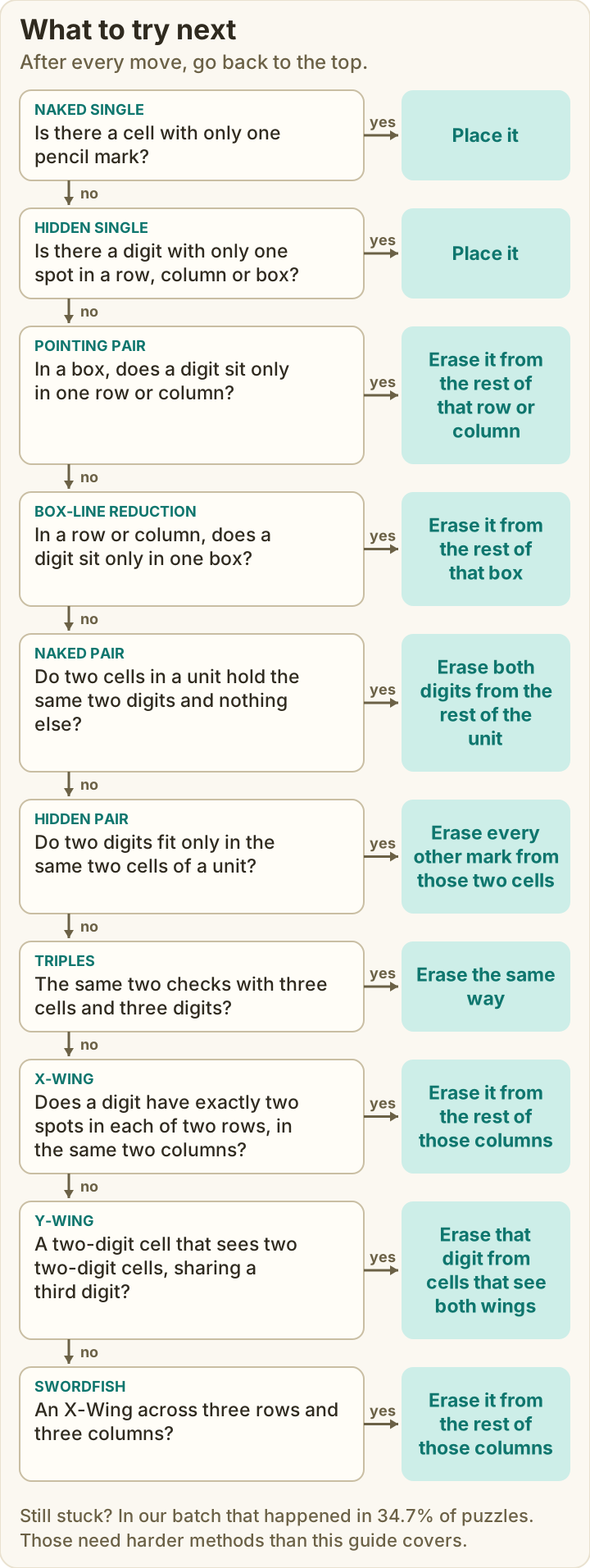
The order matters because the cheap checks are fast and they come up most. A hidden single takes seconds to spot. An X-Wing means looking at one digit across the whole grid.
The worked puzzle
Here is the puzzle we solve in the rest of this guide. It came out of the batch, and our solver checked that it has one solution. Rows are numbered 1 to 9 from the top, columns 1 to 9 from the left, and the nine boxes are numbered like the keys on a phone: box 1 at the top left, box 9 at the bottom right.
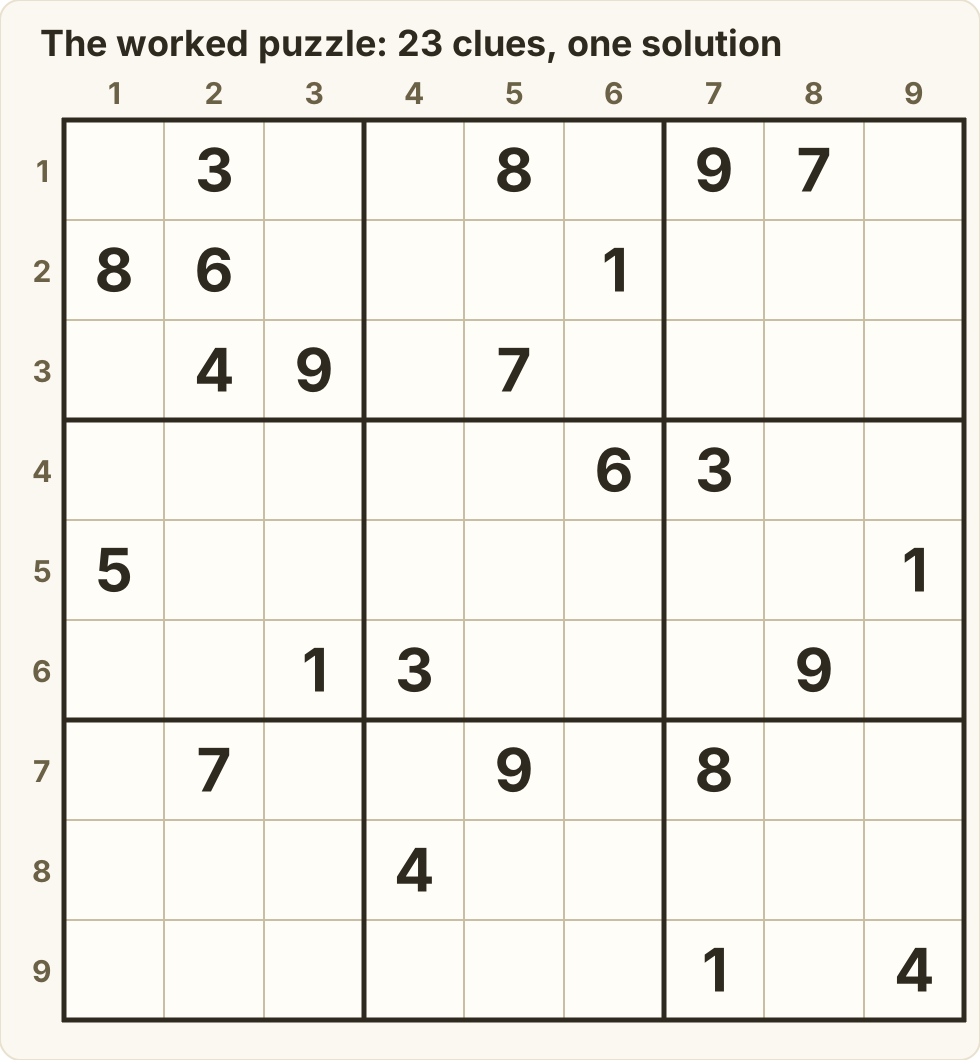
Try it yourself first if you like. The full answer is here, one row per line:
Show the solution
Our solver needed 63 steps. Singles did 58 of them: 30 naked singles and 28 hidden singles. Five times, singles ran out.
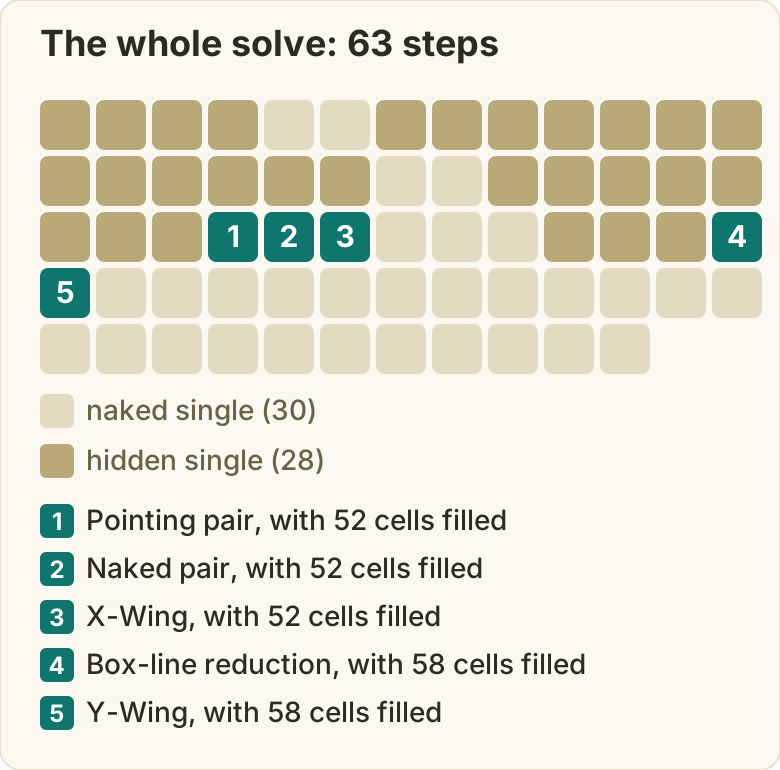
Look at stalls 1, 2 and 3. They come back to back, and none of them places a digit. Each one only erases pencil marks, and each one sets up the next. Only after the third do singles start flowing again.
Naked singles
This is the easiest move, and our beginner's guide has more on finding them. Here is one from step 5 of the worked puzzle.
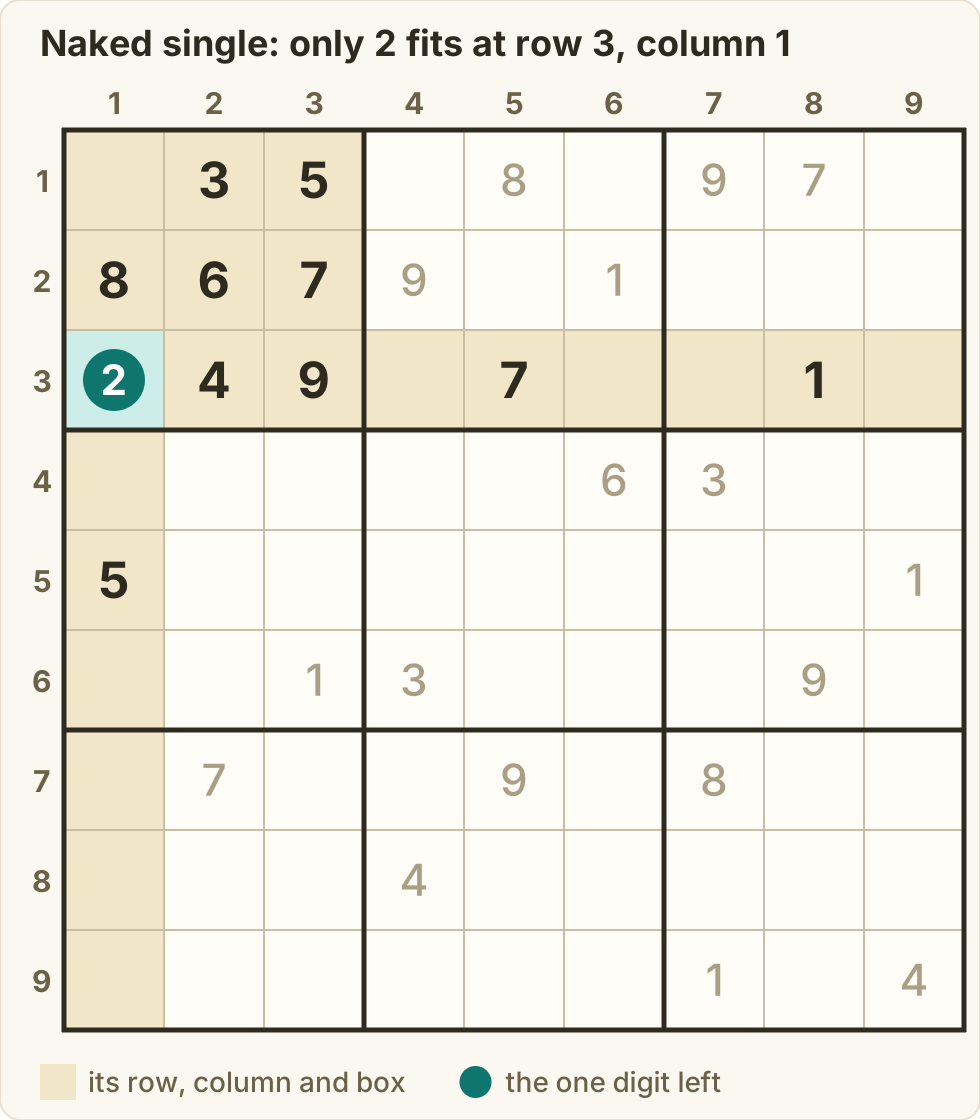
Row 3 already has a 7 and a 1. Column 1 has a 5. Box 1 has 3, 4, 5, 6, 7, 8 and 9. Put those together and every digit except 2 is taken, so the cell at row 3, column 1 is 2. Across the batch, naked singles placed 308,838 digits, more than any other move.
Hidden singles
A hidden single is a digit with only one possible cell in a row, column or box, even if that cell has other pencil marks. The beginner's guide linked above covers how to scan for them, so here is just the number: across the batch, 28.8% of all placed digits were hidden singles. In the worked puzzle it was 28 of 58. They never stop mattering, even on the hardest grids.
This one turns up at step 36 of the worked puzzle, a few moves after the X-Wing:
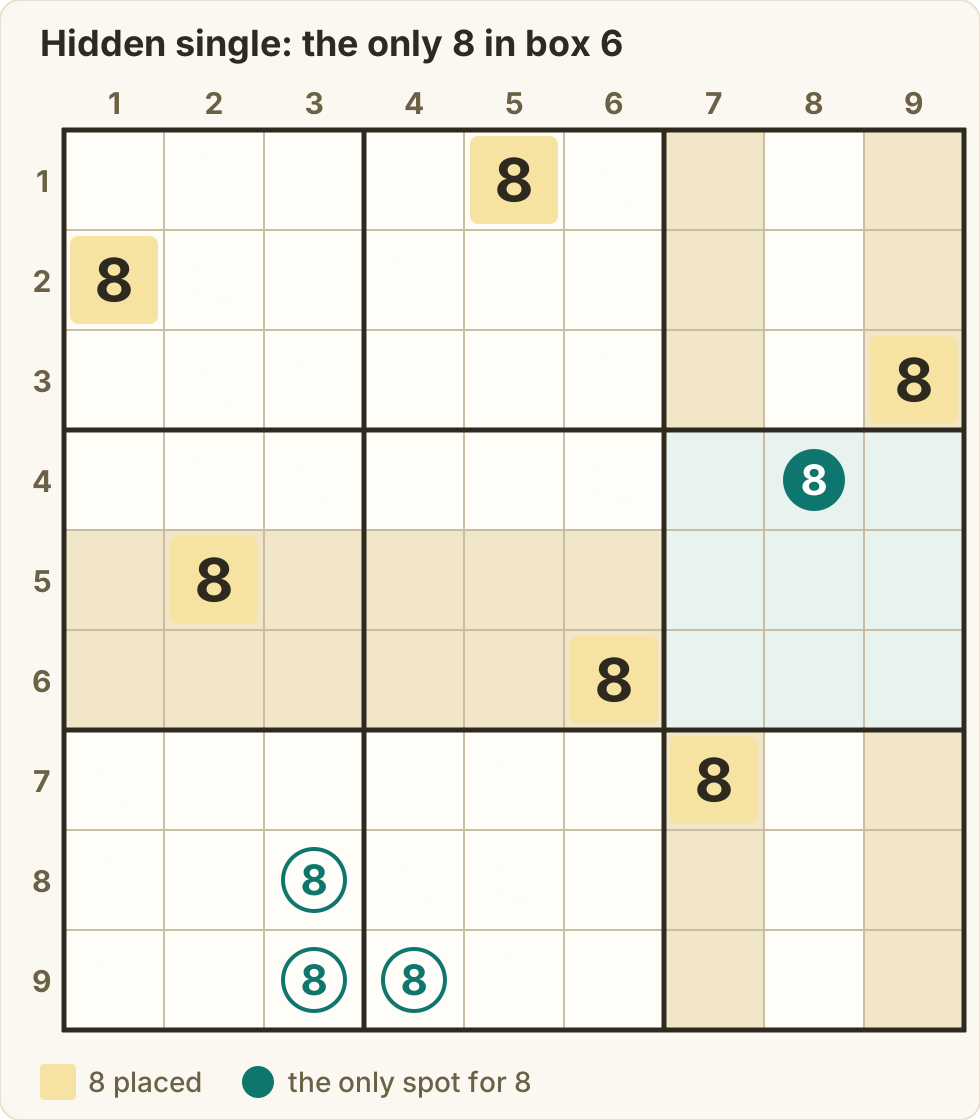
When you check for hidden singles, go digit by digit and box by box. It is slower than scanning cells, but it finds the ones that hide in a cell full of pencil marks.
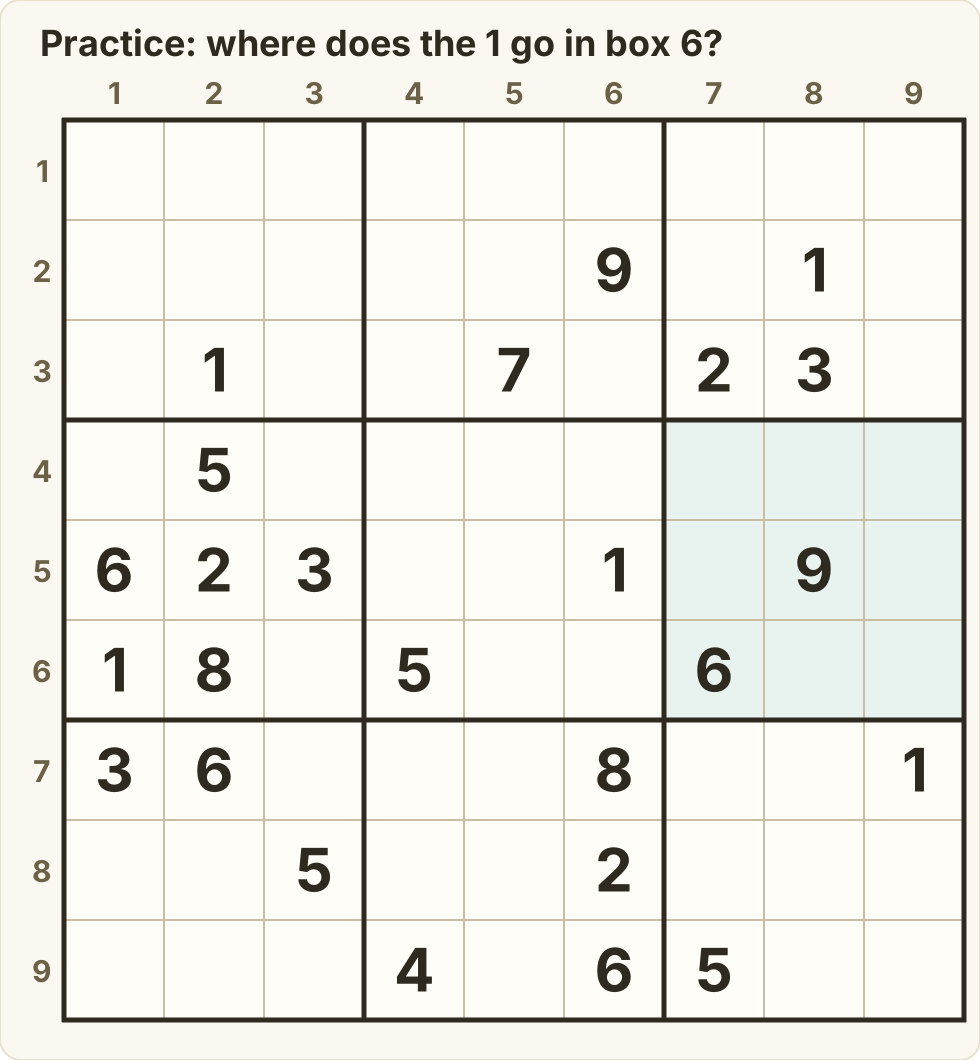
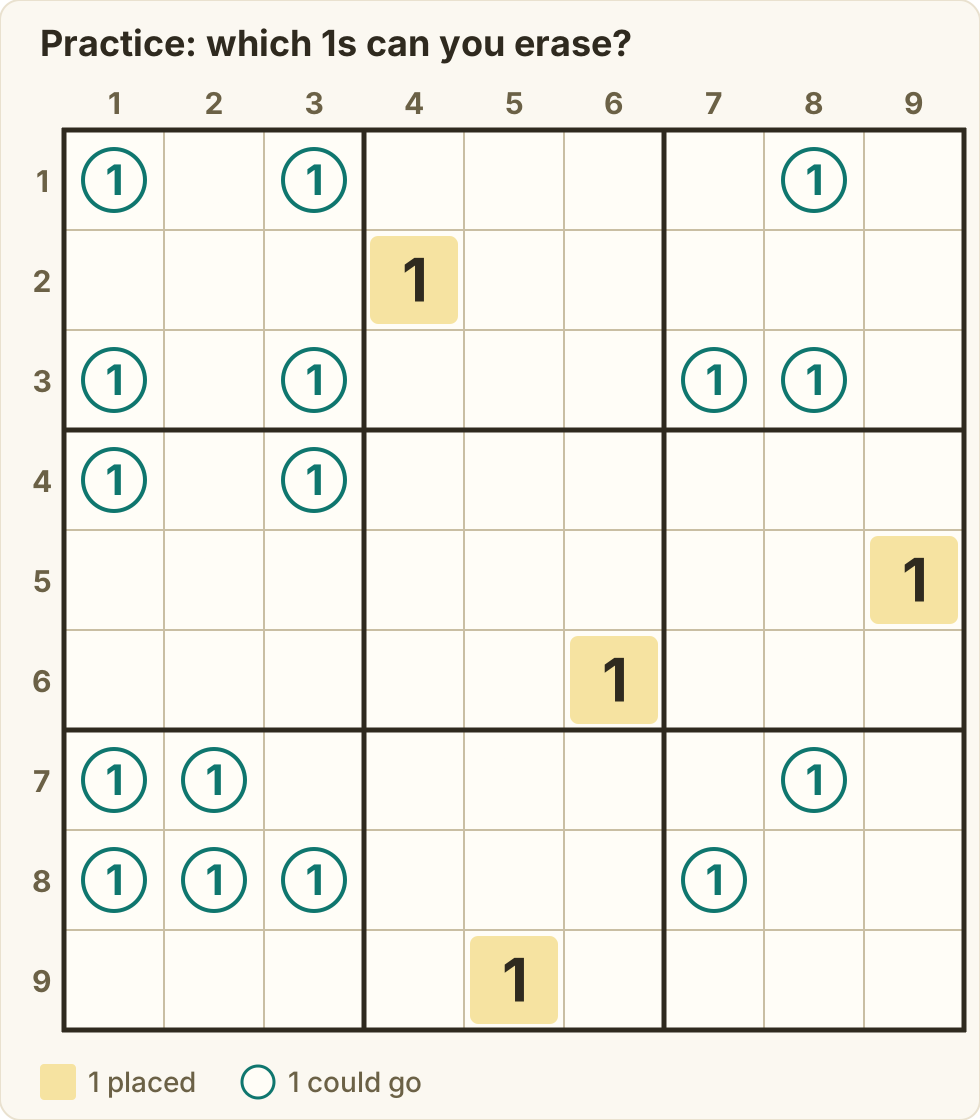
Your turn. This practice grid shows only the starting clues, so you can check the answer by eye. In the answers below, r4c7 means row 4, column 7.
Show the answer
r4c7, since rows 5, 6 and columns 8, 9 already hold a 1.
Pointing pairs
This is the worked puzzle's first stall, with 52 cells filled and no single anywhere. Look at the 5s in box 8.
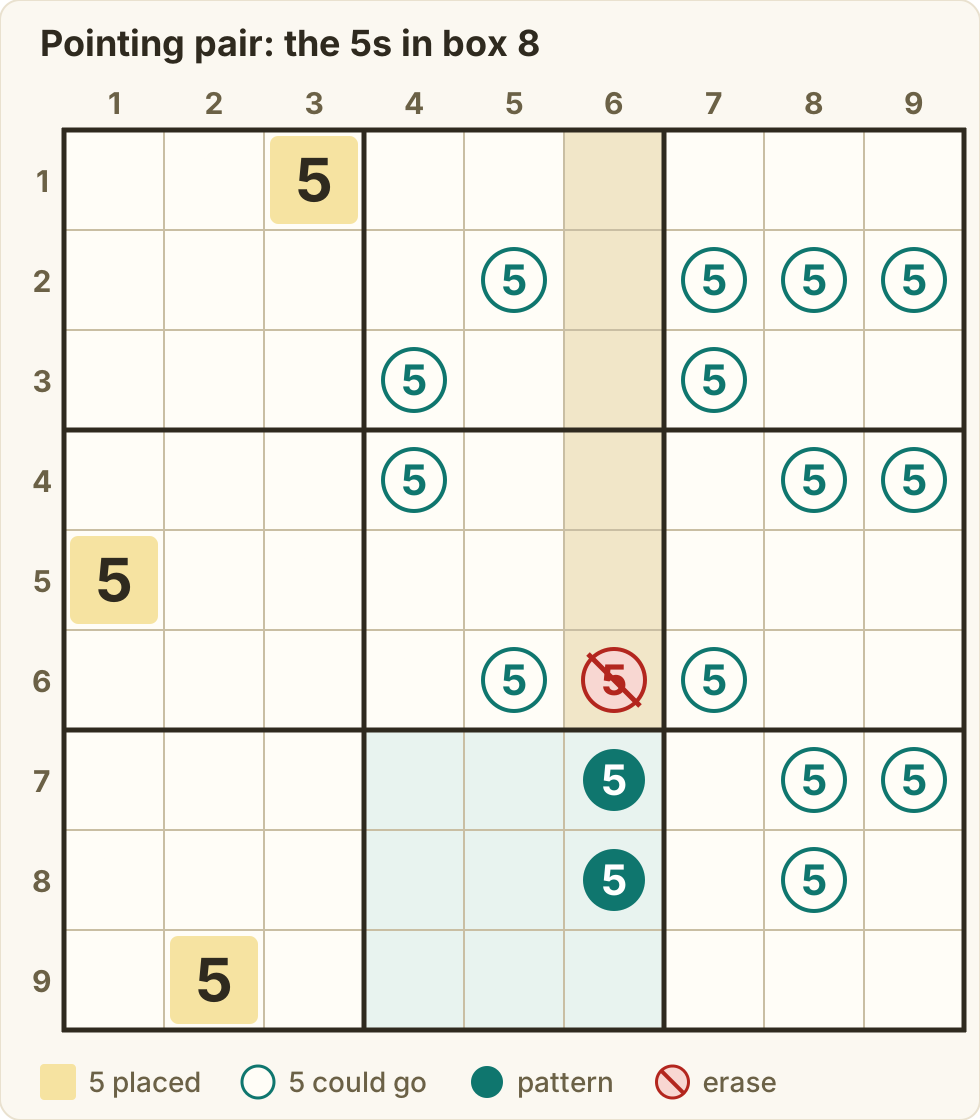
Box 8 needs a 5 somewhere. The only cells that can take it are row 7, column 6 and row 8, column 6. We don't know which one yet, but both are in column 6. So column 6 gets its 5 from inside box 8, and no other cell in column 6 can be a 5. That erases the 5 from row 6, column 6.
The rule: if all of a digit's spots inside a box sit in one row or one column, erase that digit from the rest of that row or column. The box "points" along the line. It works with three cells in a line too.
You can find it by looking at one digit and one box at a time. Ask, "where can this digit go in this box?" If the answer is two or three cells in a straight line, you have one. The same move turns up outside Sudoku: in Meowdoku, two squares of one color sitting in the same row clear the rest of that row.
In our batch this was the fix 15,747 times, 61% of every stall.
Show the answer
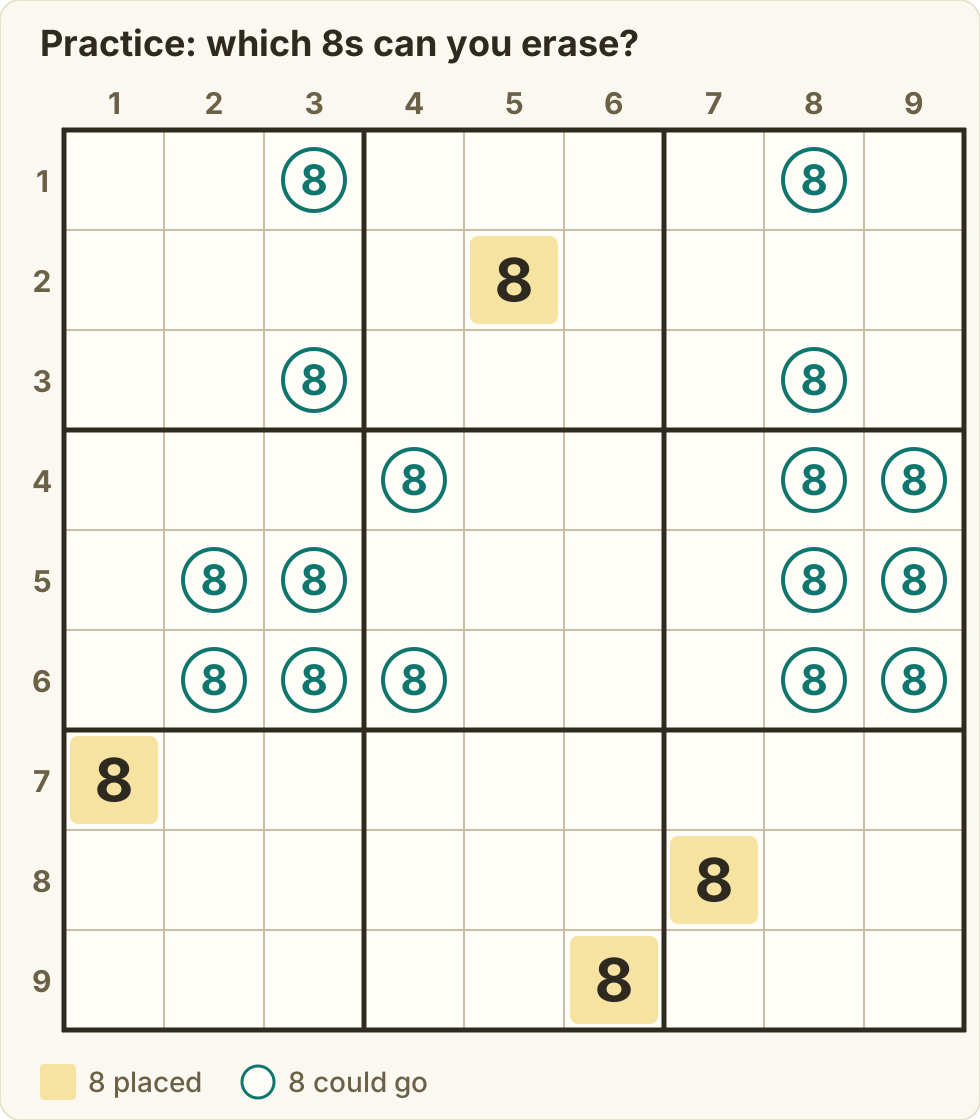
Erase r5c3 r6c3 because of box 1, and r4c8 r5c8 r6c8 because of box 3.
Naked pairs
Erasing that 5 changed row 6, column 6. Before, its pencil marks were 2, 5 and 8. Now they are 2 and 8. Row 6, column 2 already held only 2 and 8, so row 6 now has two cells with the same two digits and nothing else.
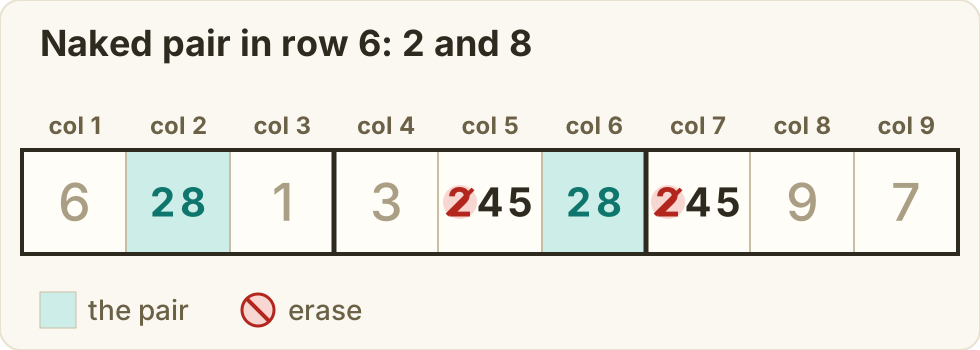
Between them those two cells will use up the 2 and the 8. One of them is 2 and the other is 8, and we don't need to know which. So no other cell in row 6 can be a 2 or an 8. That erases the 2 from columns 5 and 7 of row 6.
The rule: two cells in the same row, column or box with the same two pencil marks and no others. Erase both digits from every other cell in that row, column or box. Naked pairs were the fix in 10.6% of stalls, and 20.2% of puzzles needed at least one.
To spot them, look for cells with only two pencil marks. Then check whether another cell in the same row, column or box has the same two.
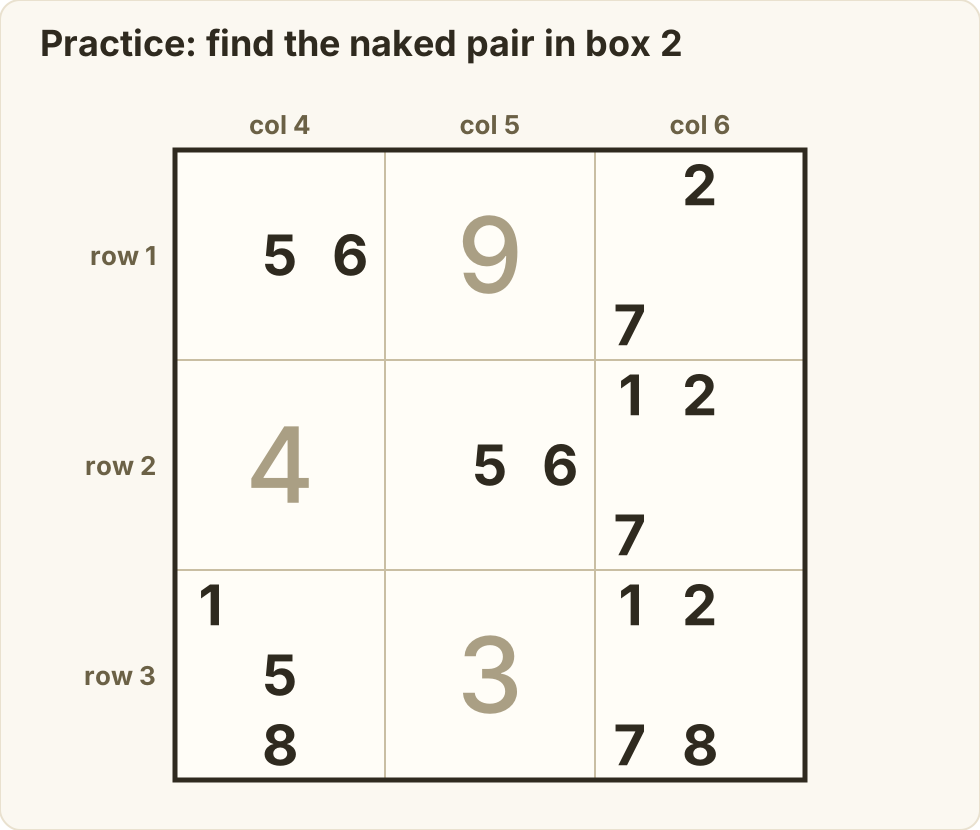
Show the answer
r1c4 and r2c5 are the 5 6 pair, so erase the 5 from r3c4.
The X-Wing
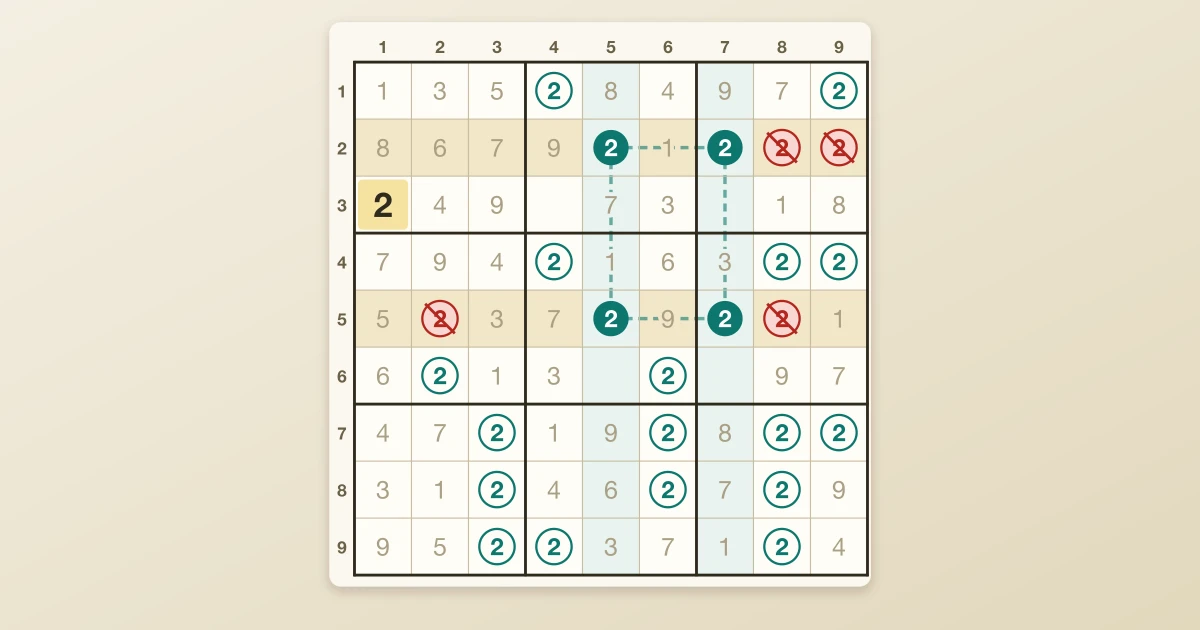
That naked pair took the 2 out of row 6, columns 5 and 7. Look at what it left behind. In column 5, a 2 can now go only in rows 2 and 5. In column 7, also only in rows 2 and 5. The four spots make the corners of a rectangle.
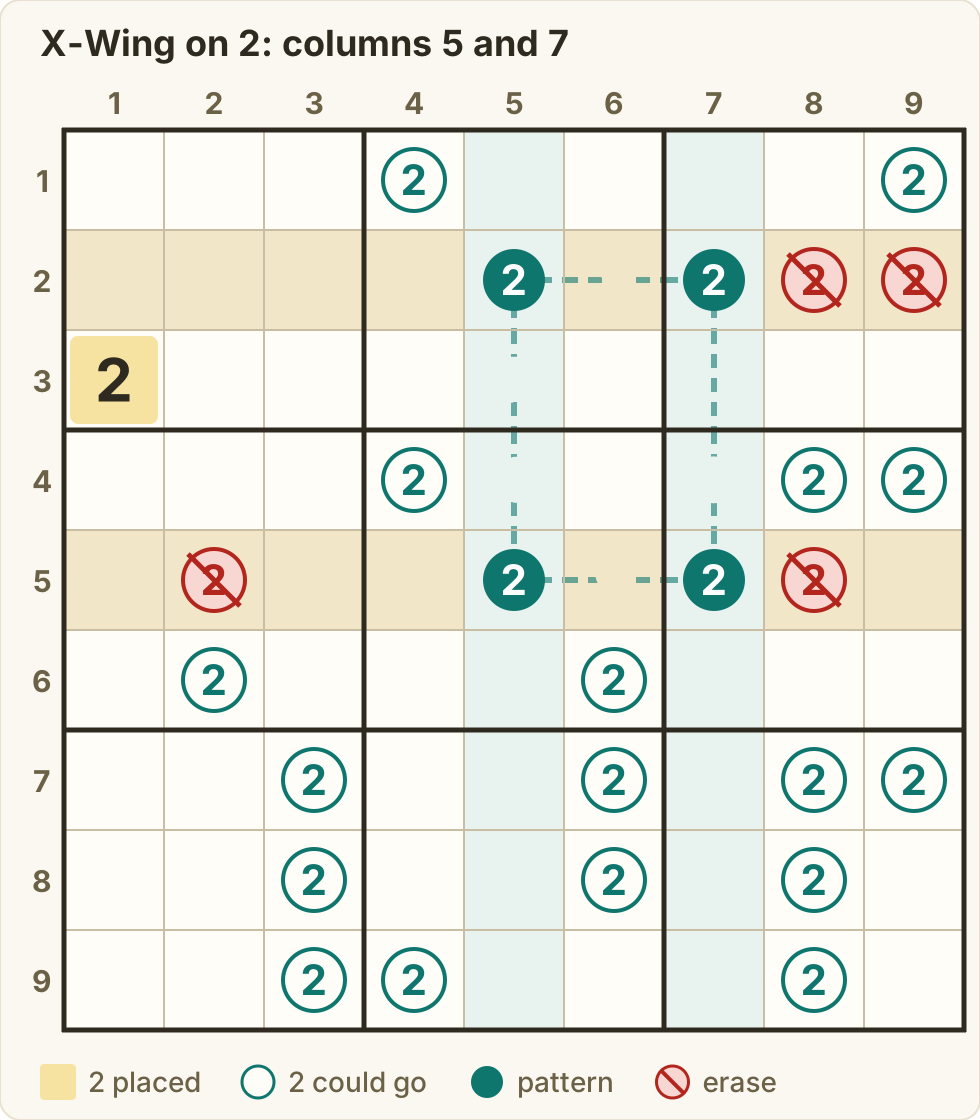
Column 5 needs a 2, in row 2 or row 5. Column 7 needs one too, in row 2 or row 5. They can't both use the same row, because a row holds only one 2. So one column takes its 2 in row 2 and the other takes it in row 5. Either way, rows 2 and 5 each get their 2 from these corners. Every other 2 in rows 2 and 5 goes. That clears four pencil marks: row 2, columns 8 and 9, and row 5, columns 2 and 8.
The rule: pick one digit. Find two columns where it has exactly two spots, and the spots sit in the same two rows. Erase the digit from the rest of those two rows. It works the other way round too, with two rows and their two columns.
This is where the numbers surprised us. Of 25,834 stalls, the X-Wing was the fix in 311, just 1.2%. Only 299 of our 10,000 puzzles needed one. So learn it, but get quick at pointing pairs first.
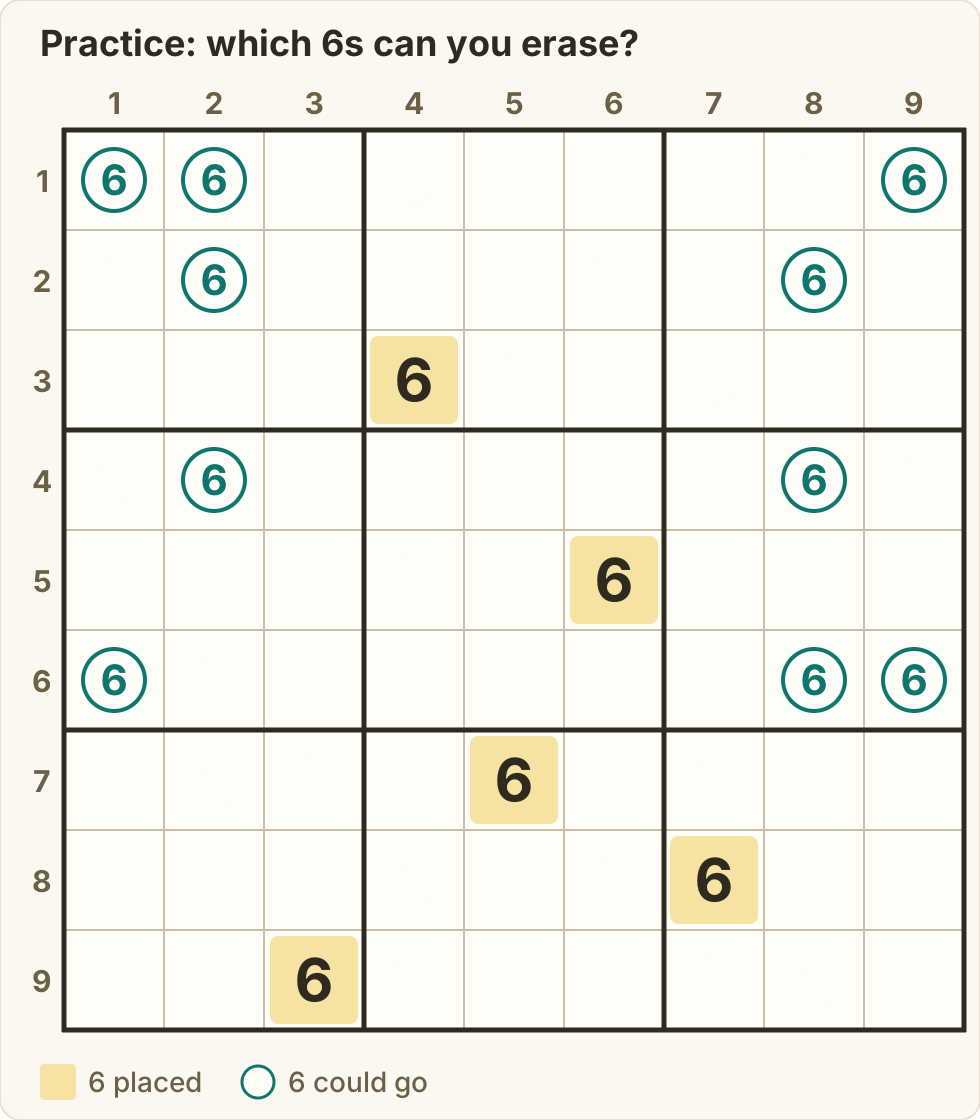
Show the answer
Rows 2 and 4 lock the 6 into columns 2 and 8: erase r1c2 r6c8.
Box-line reduction
After the X-Wing, six singles fall into place. Then the worked puzzle stalls again at 58 cells. Look at the 2s in column 8.
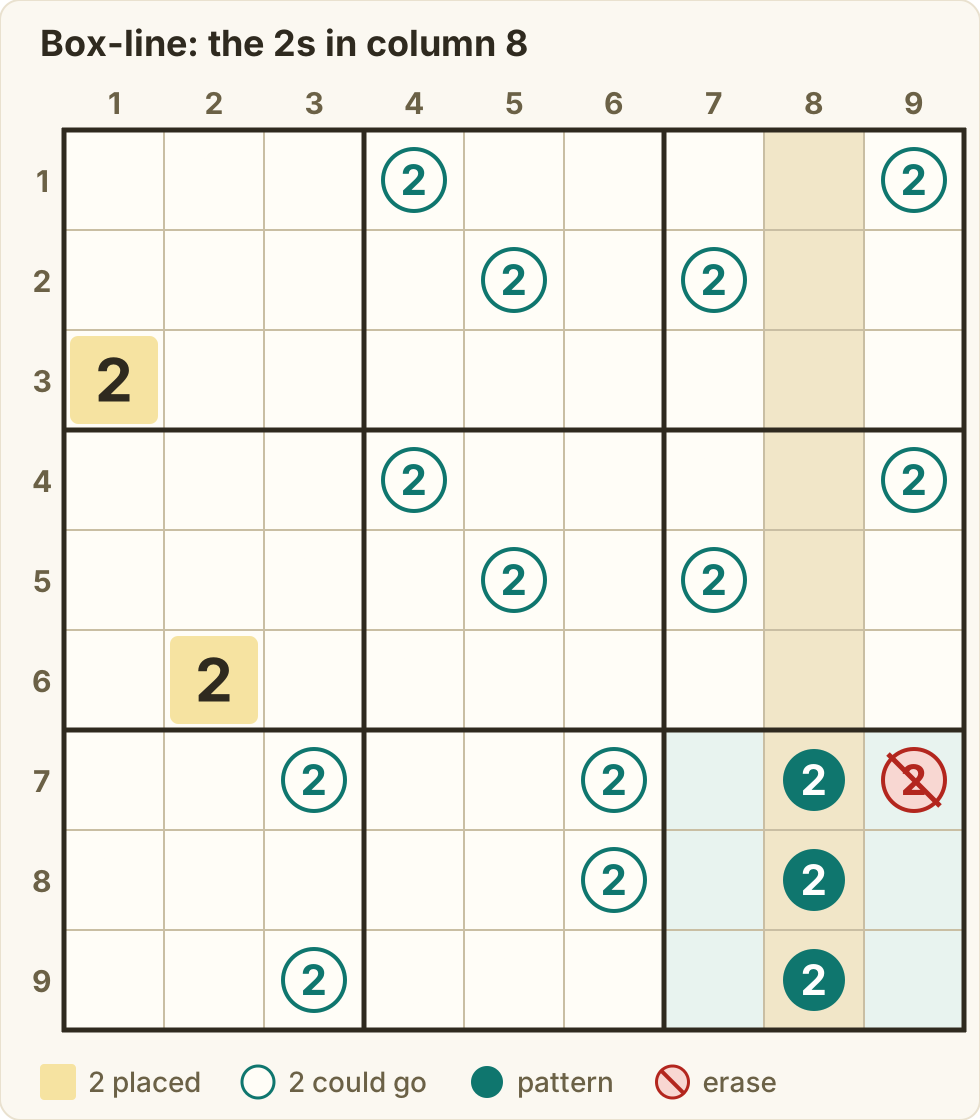
The X-Wing took the 2 out of rows 2 and 5 of column 8. Now column 8 can only put its 2 in rows 7, 8 or 9, and all three of those cells are in box 9. So box 9's 2 has to be in column 8. That erases the 2 from row 7, column 9.
This is the pointing pair turned around. A pointing pair starts from a box and clears a line. Box-line reduction starts from a row or column and clears a box. The rule: if all of a digit's spots in a row or column sit inside one box, erase that digit from the rest of that box. It was the fix in 14.5% of stalls, second only to the pointing pair.
Show the answer
Column 2 keeps its 1 inside box 7: erase r7c1 r8c1 r8c3.
The Y-Wing
Straight after that comes the last stall. This one needs three cells, each with exactly two pencil marks.
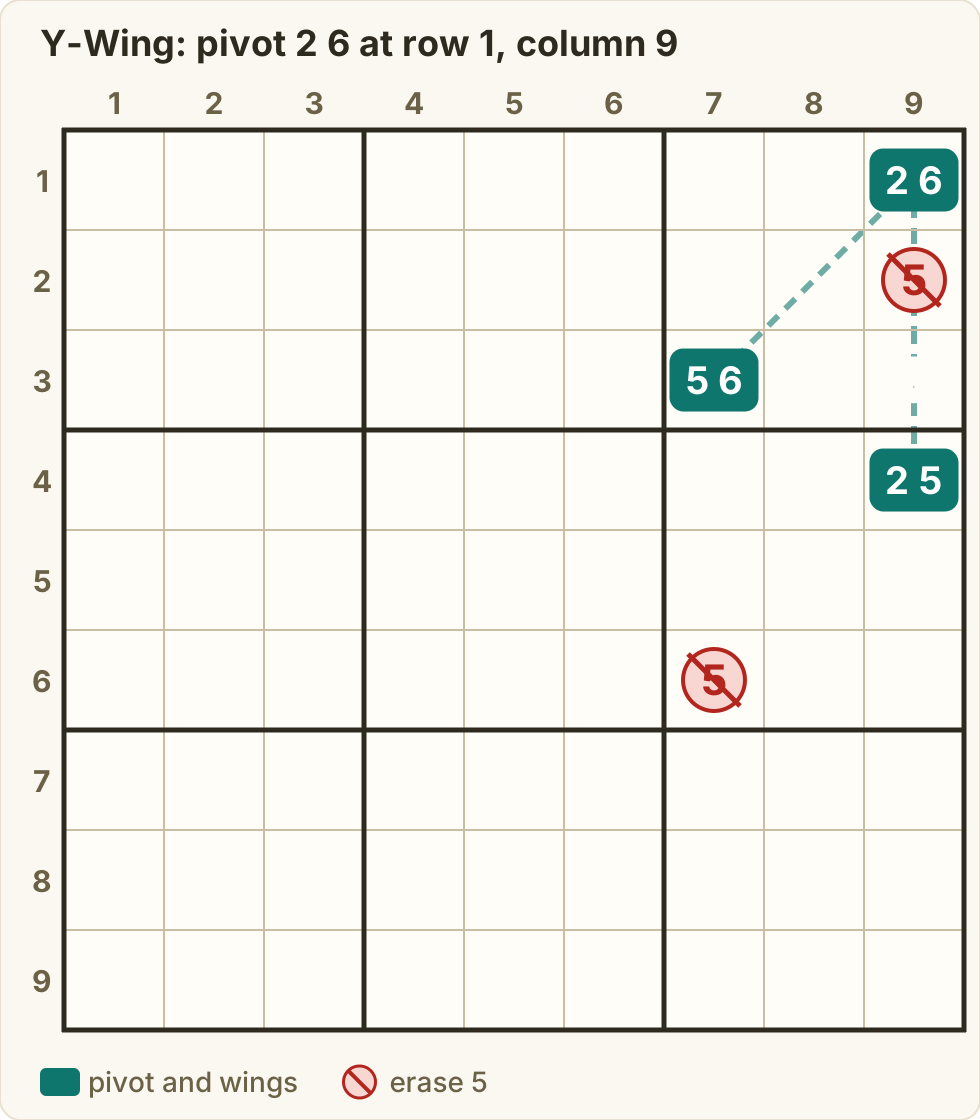
The middle cell, called the pivot, is row 1, column 9. It can only be 2 or 6. It shares a box with row 3, column 7 (5 or 6) and a column with row 4, column 9 (2 or 5). These two are the wings.
Follow both cases. If the pivot is 2, row 4, column 9 can't be 2, so it is 5. If the pivot is 6, row 3, column 7 can't be 6, so it is 5. Either way one of the wings is a 5. So any cell that sees both wings can't be 5. Row 2, column 9 sees both, and so does row 6, column 7. The 5 comes out of both. After that, 23 singles in a row finish the puzzle.
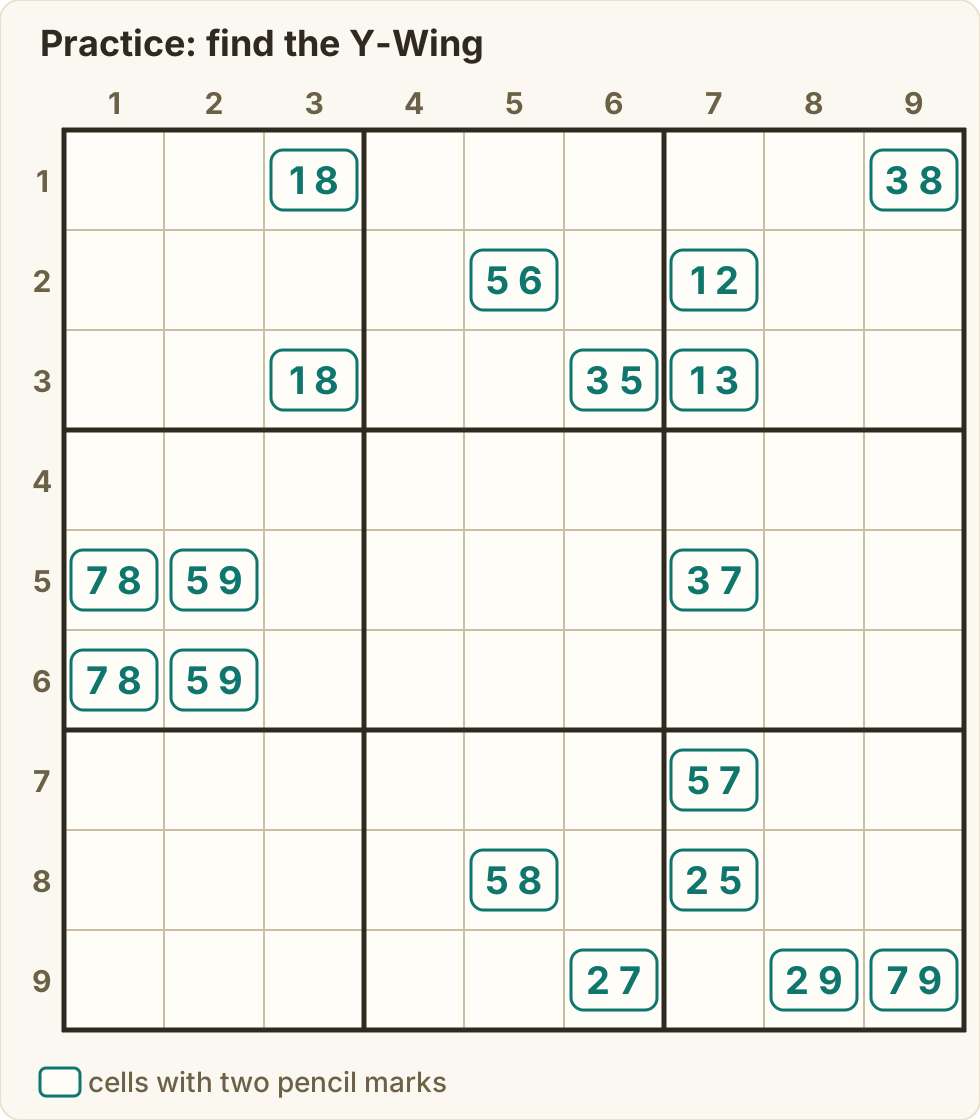
The rule: a pivot with two pencil marks, A and B. One wing it can see holds A and C, the other holds B and C. Erase C from every cell that sees both wings. It was needed in 863 of our puzzles and was the hardest step in 422, far more than the X-Wing's 11. To look for one, start from the cells with two pencil marks and ask which of them see each other.
Show the answer
Pivot r1c9, wings r1c3 and r3c7: erase the 1 from r3c3.
Hidden pairs
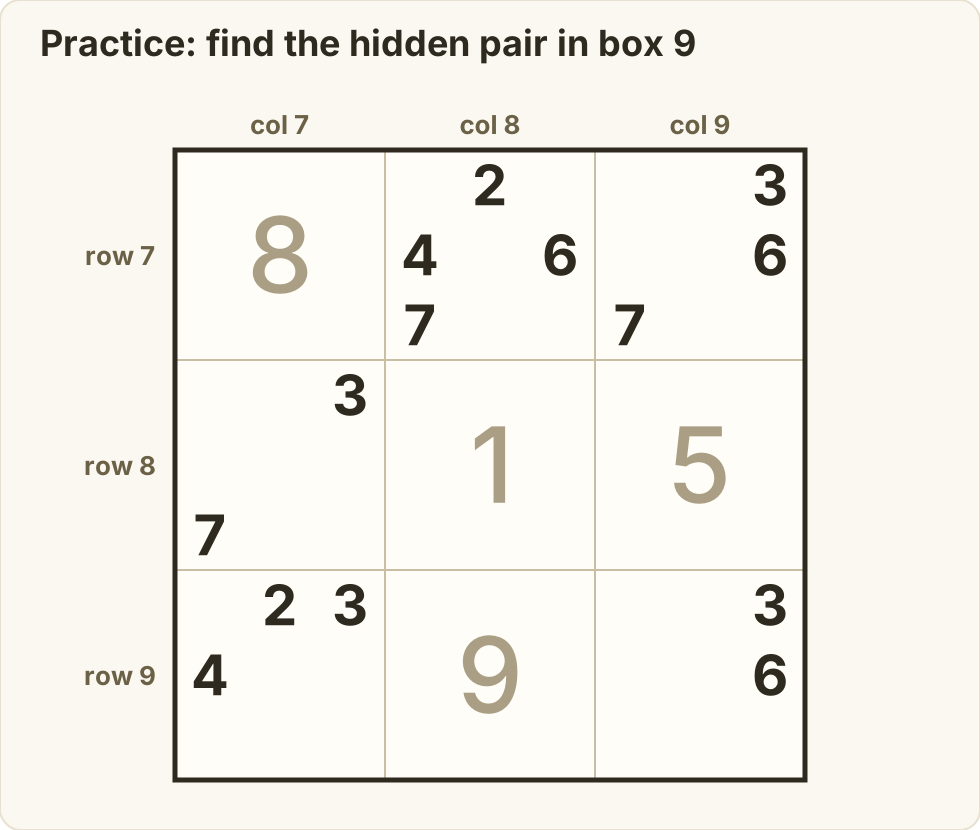
The worked puzzle never needed this one, so here is an example from another puzzle in the batch. Look at box 9 below. The digits 1 and 9 can only go in two of its cells.
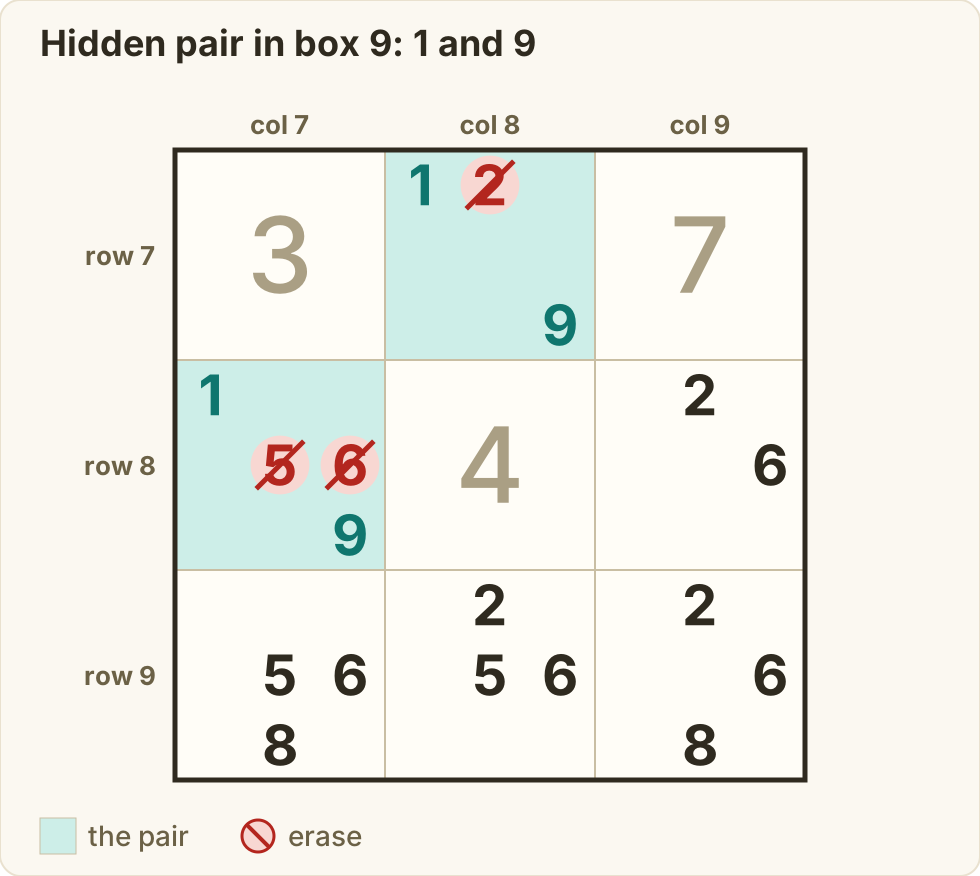
Box 9 needs a 1 and a 9, and both can only go in row 7, column 8 or row 8, column 7. So those two cells are the 1 and the 9, in some order, and they can't be anything else. Erase every other pencil mark from them: the 2 from the first, and the 5 and 6 from the second.
A naked pair is two cells showing only two digits. A hidden pair is two digits that fit in only two cells, with other marks crowding them. That is why it is easy to miss. You find it by counting where each digit can go, not by looking at the cells. Hidden pairs were the fix in 7% of stalls.
Show the answer
2 and 4 fit only r7c8 r9c7: erase 6 7 there and 3 from r9c7.
Naked triples
A naked triple is the naked pair with one more cell. This box comes from another puzzle in our batch.
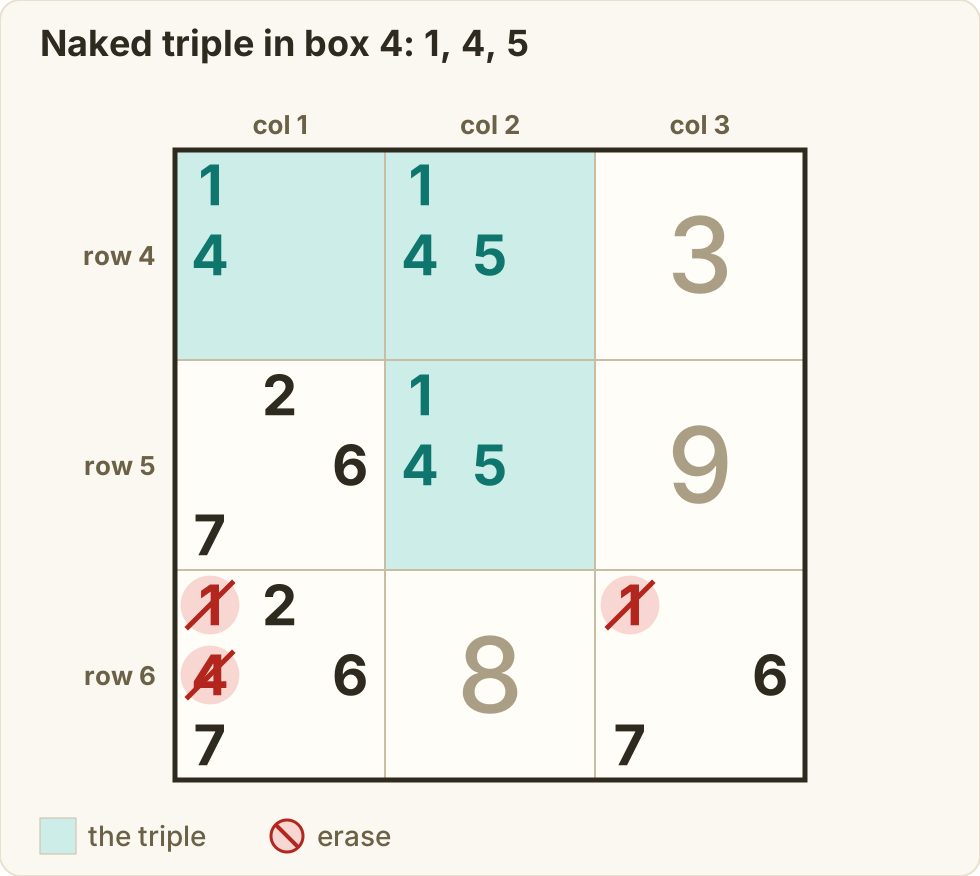
The three green cells can only hold 1, 4 and 5. Three cells, three digits, so those cells will use up the 1, the 4 and the 5 between them. The other cells of box 4 can't have any of those. That erases the 1 and 4 from row 6, column 1 and the 1 from row 6, column 3.
Notice that row 4, column 1 shows only 1 and 4. The three cells don't each need all three digits. What counts is that, added together, their marks come to three digits. Naked triples were the fix in 338 stalls, 1.3% of them, in 317 puzzles.
Hidden triples
A hidden triple is the hidden pair with one more digit. Look at 2, 4 and 5 in this box.
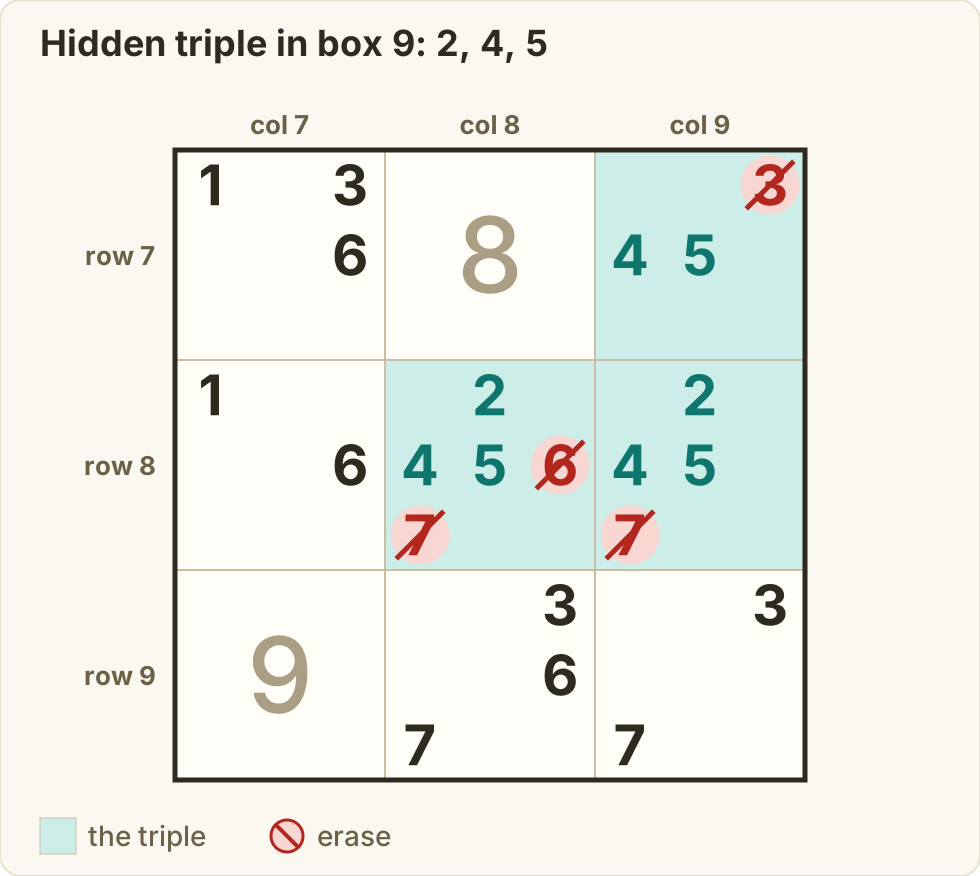
Box 9 still needs a 2, a 4 and a 5, and none of them can go anywhere except the three green cells. So those three cells are the 2, 4 and 5 in some order, and nothing else fits. Erase the 3 from row 7, column 9, the 6 and 7 from row 8, column 8, and the 7 from row 8, column 9.
It is the hardest of these to see, and the rarest: 110 stalls, 0.4%, in 108 puzzles. Count where each digit can go, as you would for a hidden pair.
Swordfish
A Swordfish is an X-Wing with three lines instead of two. This one comes from one of the 11 puzzles in our batch where Swordfish was the hardest step needed.
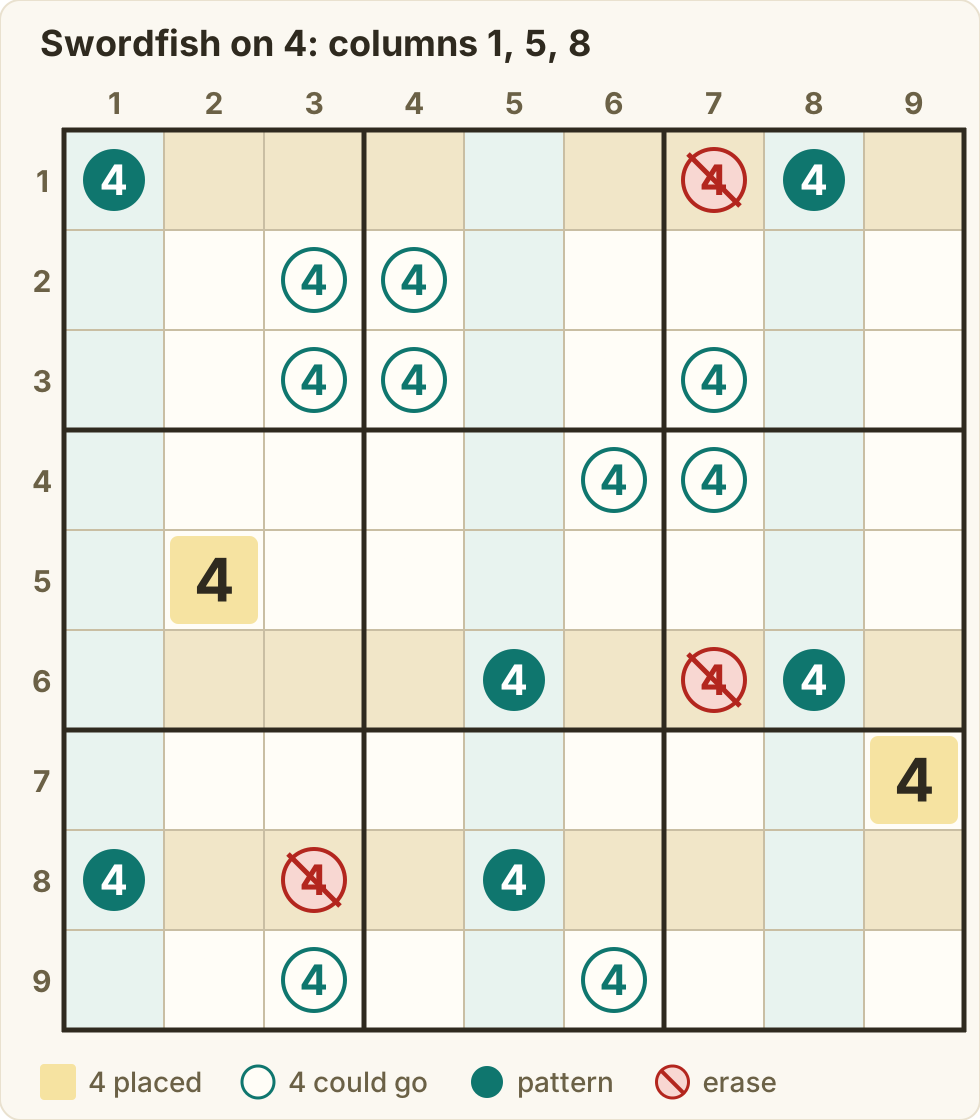
Look at the 4s in columns 1, 5 and 8. Column 1 can take its 4 in row 1 or row 8. Column 5, in row 6 or row 8. Column 8, in row 1 or row 6. That is three columns, and all their spots sit in just three rows: 1, 6 and 8. Each column needs a 4 and no row can hold two, so those three columns fill rows 1, 6 and 8 with their 4s. No other cell in those rows can be a 4. That erases it from row 1, column 7, row 6, column 7 and row 8, column 3.
A column doesn't need a spot in all three rows, only in some of them. Swordfish came up in 50 of our 10,000 puzzles, 0.5%.
When nothing on the list works
A third of our puzzles still needed something more than every technique on this page. Before you go looking for harder patterns, check your pencil marks against the grid. A missing mark or a wrong one stops every technique here from working. If they are right, the next step is chains, where you follow a run of cells that must each be one of two digits. SudokuWiki lists them all with examples.
Getting faster at spotting them
Knowing a pattern's name is what lets you see it. Before you know what a naked pair is, two cells reading 2 8 and 2 8 look like any other cells. Afterwards they jump off the grid. The quickest way to build that habit is the order above. Check for pointing pairs every time singles run out, because in our tests that one check fixed 61% of stalls.
For puzzles to practice on, see our roundup of the best Sudoku and number puzzle games. One of them, Good Sudoku, gives hints that name the technique you need instead of handing you the digit, so you can check yourself against this page.
Related articles
Four Years of Threes!: Why I Can't Get Past 1536
Four years, one 1536 card, and an all-time best of 69,222, of which a single card is 85%. The wall in Threes!, and why the game keeps me playing anyway.
Meowdoku: A Surprisingly Addictive Logic Puzzle
A colorful grid, nine hidden cats, three lives. Meowdoku looks hard at first glance, but the deduction chain that opens it up is pure Sudoku logic.
The Little Red Sliding Puzzle We All Grew Up With
The cheap plastic sliding puzzle drove us all crazy, and some were literally unsolvable. Play two puzzles and see how a second hole fixes everything.