
Mobile games now make up more than half of the whole global games market. That is bigger than PC and console put together. It's a strange thing to think about if you remember when "mobile game" meant Snake on a Nokia. Most players never look at the whole map. They know the one genre their phone keeps recommending, and they rarely try anything outside it.
I've spent the last several years building word games at Logic Loft, so I think a lot about one small corner of this map. But you can only build well in one genre if you know what's around it: what else people play, how those games make money, and where the players overlap. So this is the map. Fourteen genres, what makes each one what it is, and a handful of games worth your time in each. A few of ours are in here too, in the genres where they belong.
A note on the list: every game below is real, live right now, and linked to its actual home (official site, developer page or store listing). I'd rather send you somewhere real than pad a list with dead links.
Puzzle
Puzzle is one of the top-earning genres in mobile, even if it's not the loudest. The games are short, separate challenges you solve with logic, pattern spotting or a feel for shapes, not fast fingers. Match-3 games bring in most of the puzzle money, but the genre keeps changing. "Merge" games, where you combine two items to make a better one, have taken off over the last two years. One kind drops things into a box, and two of the same that touch become one bigger thing, like the Watermelon Game or Astral Fusion. Every puzzle game gives you a small problem you can solve, and the fun is in the moment you solve it.
- Candy Crush Saga: the match-3 that set the template for modern free-to-play, still adding levels more than ten years later.
- Tetris: the original falling-block puzzle, still played in competitions over 40 years on.
- Monument Valley: an optical-illusion puzzler inspired by the artist M.C. Escher, and one of the games that showed mobile puzzles could be art.
- Two Dots: simple dot-connecting with a loyal cult following.
- Cut the Rope: cut ropes to swing candy to Om Nom, one of the genre's early stars.
- Homescapes: match-3 mixed with a story about fixing up a house, the format Playrix built its business on.
Word
Word games make you think in language instead of shapes. You spell, guess and work things out rather than match colours. The genre is smaller than puzzle in downloads, but it earns well for its size, and its players come back every day. Word games are the ones people play every single day, and Wordle's breakout in 2022 showed that habit could go mainstream.
This is our home turf. Pairdle is our daily word puzzle. Instead of guessing one letter at a time like Wordle, you build the hidden word out of two-letter pairs. The board is four real words cut into pairs, and one of those words is the answer. In the standard game the answer has six letters, so you are looking for three pairs, one each for the FIRST, MID and LAST boxes, out of the 12 tiles on the board. You get six guesses. A pair turns blue if it's in the answer and in the right box, red if it's in the answer but in the wrong box, and grey if it isn't in the answer at all. Pro (8 letters, four boxes, 16 tiles) and Expert (10 letters, five boxes, 20 tiles) are harder, and Pro is free for everyone. We call it "Word Sudoku" because the answer is already on the board, and you find it with logic, not by getting lucky with your vocabulary. Pairdle Slide takes the same letter pairs and turns them into a sliding-tile puzzle, where each move brings you closer to revealing a grid of hidden words.
- Pairdle: our own daily puzzle, where you work out a hidden word two letters at a time.
- Pairdle Slide: our sliding-tile take on the same letter-pair idea.
- Wordle: the daily five-letter hit that got the whole world playing word games again.
- Scrabble GO: the classic tile game on your phone, with the official dictionary and live multiplayer.
- Words With Friends: the take-your-turn-whenever multiplayer word game that helped define social mobile gaming in the 2010s.
- Wordscapes: part word search, part crossword, and one of the top-earning word games on mobile.
- NYT Spelling Bee: the daily honeycomb puzzle where you make words from seven letters, a big part of the NYT puzzle subscription.
Casual
"Casual" is less about a mechanic and more about a way of designing: easy to pick up, almost nothing to learn, made for five minutes on the couch or in a checkout line. It reaches people who would never call themselves gamers, like parents, commuters and anyone killing time. Puzzle and casino games bring in most of the money in this group. The big pattern right now mixes simple play (match-3, block-blast, merge) with a soap-opera style story that moves forward as you win. Playrix more or less invented that format, and everyone else has copied it since.
- Coin Master: spin a slot machine, then raid other players' villages. Downloaded over 300 million times.
- Toon Blast: a cartoon block-blast puzzler that often ranks in the top five earning games on iOS.
- Township: farming and town building mixed with match-3.
- Gardenscapes: the first story-driven match-3 from Playrix, the one that set the formula.
- Toca Boca World: an open, can't-lose digital dollhouse made for kids to play freely.
- Merge Dragons!: the puzzle adventure that helped make the "merge" mechanic popular.
Hyper-Casual (Swipe & Tap)
Hyper-casual games are defined by their controls, not their theme. One tap, one swipe, nothing to learn. They are built to spread fast and earn money from ads, not to keep you around for months, and a session often lasts under a minute. The pure ads-only version has cooled off as the cost of finding new players went up. Much of the genre has moved to "hybrid-casual": the same simple controls, with some light long-term goals and in-app purchases added so people keep playing.
- Subway Surfers: the most downloaded endless runner ever made, still adding hundreds of millions of downloads a year.
- Crossy Road: the blocky "endless crosser" that helped bring hyper-casual into the mainstream.
- Hole.io: steer a hole that swallows the city around it. Over 360 million downloads, and later moved to consoles.
- Flappy Bird: the classic one-tap game, relaunched in 2025 under new owners.
- Stack: tap to drop blocks on a tower, the game behind a whole family of "stack" clones.
- Helix Jump: tap to drop a ball down a spiral tower, about as simple as a game can get.
Arcade
Arcade is the genre with the longest history. It's fast, skill-based play taken straight from coin-op machines: chase a high score, lose lives, face harder levels, now on a touchscreen. After Temple Run came out in 2011, the endless runner boom made "run and dodge" one of the main mobile formats. Old arcade names like Pac-Man, Sonic and Angry Birds keep coming back as new mobile games that get regular updates, not as straight copies of the old ones.
- Pac-Man: the 1980 coin-op icon, still being released on mobile and console.
- Angry Birds: the slingshot game whose 2009 launch helped kick off the whole mobile gaming boom.
- Fruit Ninja: swipe to slice fruit, one of the best known early touchscreen hits.
- Temple Run: the first big 3D endless runner. The series has passed 2.5 billion downloads.
- Sonic Dash: SEGA's mascot as an endless runner, live since 2013.
- Geometry Dash: jump in time with the music through tricky levels, with a big community that builds its own.
Slots & Casino
Social casino is a real and sizeable business, and it rests on one rule: you can't win real money. Slot spins, poker hands and bingo cards all run on free virtual coins and daily bonuses. That keeps these games outside gambling law while keeping the same pull: spin, almost win, spin again. They earn a lot per player, and the players skew older (most are 35 or over). Many of them came to mobile from real casinos, not from other games.
- Slotomania: the world's number one free-to-play slots game, running since 2011.
- Coin Master: slots mixed with village building. Players have spent over $6B on it.
- DoubleDown Casino: a Vegas-style social casino with over 200 copies of real slot machines.
- Jackpot Party Casino: brings real casino-floor slots from Bally and WMS to your phone.
- Zynga Poker: one of the longest-running Texas Hold'em games on mobile.
- Huuuge Casino: a social casino built around slots you play live with other people.
Shooter
On mobile today, shooters mostly means battle royale: lots of players drop onto a map and the last one standing wins. Seasons of new content and battle passes now run a genre that used to be all about fast reflexes. More than half of all battle royale players play on their phones. With official leagues, prize money and streamers, these games have reached sports media in a way few other mobile genres have.
- PUBG Mobile: the game that brought 100-player battle royale to phones, still one of the top-earning shooters in the world.
- Call of Duty: Mobile: real CoD multiplayer maps and weapons on a phone, plus its own battle royale mode.
- Garena Free Fire: the top battle royale in many developing markets, built for 10-minute matches on cheaper phones.
- Fortnite: the battle royale that grew into a place to hang out with friends and build your own games.
- Brawl Stars: a fast team shooter seen from above, with a real esports scene.
- Critical Ops: a tactical 5v5 first-person shooter with over 100 million downloads.
RPG
RPG is mobile's single top-earning genre right now, ahead of strategy and ahead of casual. The reason is nearly always the same: "gacha" character collecting, where you spend to pull random characters, stacked on top of fighting and levelling up. Players aren't only buying power. They want particular characters, so spending feels more like collecting trading cards than a normal in-app purchase. The biggest recent change is how good these games look. Some mobile RPGs now ship with budgets and graphics that would have been console-only ten years ago.
- Genshin Impact: an open-world gacha action RPG that changed what people expect from a "free" mobile RPG.
- Honkai: Star Rail: a turn-based sci-fi gacha RPG and one of the most profitable gacha games running today.
- RAID: Shadow Legends: a dark-fantasy hero collector with over 900 characters in 15 factions.
- AFK Arena: a hero collector where your team keeps getting stronger while you're away.
- Diablo Immortal: a full Diablo game for mobile, with a real story and ten classes to play.
- Summoners War: Sky Arena: a long-running monster-collecting RPG with fans all over the world.
Adventure
Adventure reaches more players than any other mobile genre. These games are driven by story or exploring, often mixed with puzzle or action RPG play, and they reward curiosity more than speed. It's also the genre least tied to one mechanic. An adventure game can be a wordless walk, a full action RPG or a chain of escape-room puzzles. What they share is the feeling that you're going somewhere instead of only clearing levels.
Epic Words, our word-ladder game, sits here instead of in Word on purpose. It's built around exploring, with planets and packs to work through instead of a single daily puzzle, and each stage is a small place to visit in its own right.
- Epic Words: our word-ladder adventure, where you build word pieces into words as you move through themed planets.
- Alto's Odyssey: a calm desert snowboarding adventure and one of the best looking games on mobile.
- Monument Valley: an Escher-inspired puzzle adventure and one of the most awarded mobile games ever made.
- Oceanhorn: a Zelda-style action adventure RPG with music by Final Fantasy composer Nobuo Uematsu.
- The Room: a BAFTA-winning series of escape-room puzzle adventures.
- Sky: Children of the Light: a wordless game where you explore with other players, from the makers of Journey.
Simulation
By downloads, simulation is the biggest genre in mobile gaming, about a fifth of all downloads worldwide, tied with puzzle. What it copies from life changes a lot (farms, homes, whole lives), but the loop stays the same. Take something from the real world, turn it into a game about running or decorating it, and add ways to play with friends. Even with all those downloads, simulation earns less per install than RPG or strategy. It wins on how many people it reaches, not on how much each one spends.
- Hay Day: a farming game and one of Supercell's long-lasting hits, running since 2012.
- Township: town building and farming mixed with match-3.
- Design Home: decorate rooms using furniture from real brands.
- House Flipper: Home Design: the mobile version of the PC house-fixing hit, with over 50 million players across both.
- BitLife: a text-based life game where your choices shape a whole virtual life.
- Stardew Valley: the indie farming and life classic, released on mobile by the person who made it.
Strategy
Strategy flips the usual mobile numbers. It gets a small share of downloads but the biggest share of player spending, often close to a quarter of all mobile game money from a small group of players. Sessions are short: check your base, start an upgrade, close the app. But the daily habit (alliance wars, resource timers) is very hard to break. The fastest growing kind right now is "4X survival", base building mixed with huge alliance battles against other players, and it has been growing faster than the older base builders.
- Clash of Clans: the village builder that shaped the genre, running since 2012.
- Clash Royale: a real-time card game where you knock down towers, with its own world esports leagues.
- Sid Meier's Civilization VI: the full empire-building classic, with the same depth as the PC version on a touchscreen.
- Plants vs. Zombies 2: tower defense with over 200 million downloads and over 300 levels.
- Rise of Kingdoms: a real-time online strategy game built around historical nations and huge alliance wars.
- Whiteout Survival: the breakout survival strategy game whose earnings have more than doubled year over year.
Sports & Racing
Sports and racing games take two things mobile does well, quick reflexes and big-name licences, and turn them into short games you can play again and again. Real teams, real drivers, real leagues. Often the licence is the whole reason to download. What's changed in the last few years is what sits around the matches. Licensed games now borrow "player card" collecting from trading card games, which gives people a reason to come back between matches, not only during them.
- Asphalt Legends Unite: Gameloft's long-running arcade racer, with over 50 licensed cars and touch controls.
- CSR Racing 2: drag racing with officially licensed supercars and lots of tuning.
- Golf Clash: live one-on-one golf that made skill-based player-versus-player games popular.
- 8 Ball Pool: the world's most played mobile pool game, built around one-on-one ranked matches.
- EA Sports FC Mobile: officially licensed football with Ultimate Team card collecting on top.
- NBA 2K Mobile: a licensed basketball card collector with current and legendary NBA players.
Card & Board
Card and board games mostly do one thing well. They put a set of rules people already know onto a screen, so there's nothing to learn, and grandparents and grandkids can play the same game. That's a real edge over genres that have to teach a new mechanic from scratch. It's also part of why board games that get live updates now work so well: a licensed board game with live events and a battle pass can earn numbers nobody would have believed for a board game ten years ago.
- Hearthstone: the digital card game that made competitive deck building a mobile format.
- Monopoly GO!: a licensed take on the classic board game and the fastest mobile game ever to pass $5B in gross bookings.
- Ludo King: a digital version of the classic Ludo board game, with well over a billion players.
- UNO!: the official digital version of the best-selling card game, with online tournaments.
- Solitaire by MobilityWare: the original mobile Solitaire app with daily challenges, still one of the most played card games around.
- Family Feud: a digital version of the TV survey game, built for head-to-head play.
Trivia & Quiz
Trivia is gaming at its most social: fast questions, almost always played against someone or in a group rather than alone. It's the genre where "game" and "tool" blur the most. Apps made for classrooms and offices sit right next to pure fun apps. And TV game-show licences are still one of the surest ways for a trivia app to turn TV fans into daily players.
- Trivia Crack: the spin-the-wheel trivia game that shaped the genre, with over 600 million downloads in 34 languages.
- Kahoot!: the leading live group quiz app, used in classrooms and at game nights.
- Jeopardy! World Tour: the officially licensed mobile version of America's longest-running quiz show.
- Who Wants to Be a Millionaire?: the licensed app that kept the show's classic lifelines, including 50/50.
- Family Feud: the TV survey quiz, playable online or with friends in the same room.
- Sporcle: a web trivia site with millions of quizzes made by its players, played billions of times.
Where We Fit
Fourteen genres, and we build in one of them on purpose. Word games are a small, crowded corner of a much bigger map, but I think it's where the most interesting design problems are. How do you make working out an answer feel as good as a lucky slot pull? How do you make a five-minute daily puzzle as hard to put down as an alliance war in a base builder, without any of the timers?
If any of this made you want to play something instead of reading about it, good. Start with Pairdle if you like logic puzzles, Pairdle Slide if you'd rather slide your way to the answer, or Epic Words if you want the adventure version of the same idea. And if you want more guides like this, our full library of game guides covers everything from Wordle strategy to Sudoku techniques to how Mahjong solitaire works.
Related articles
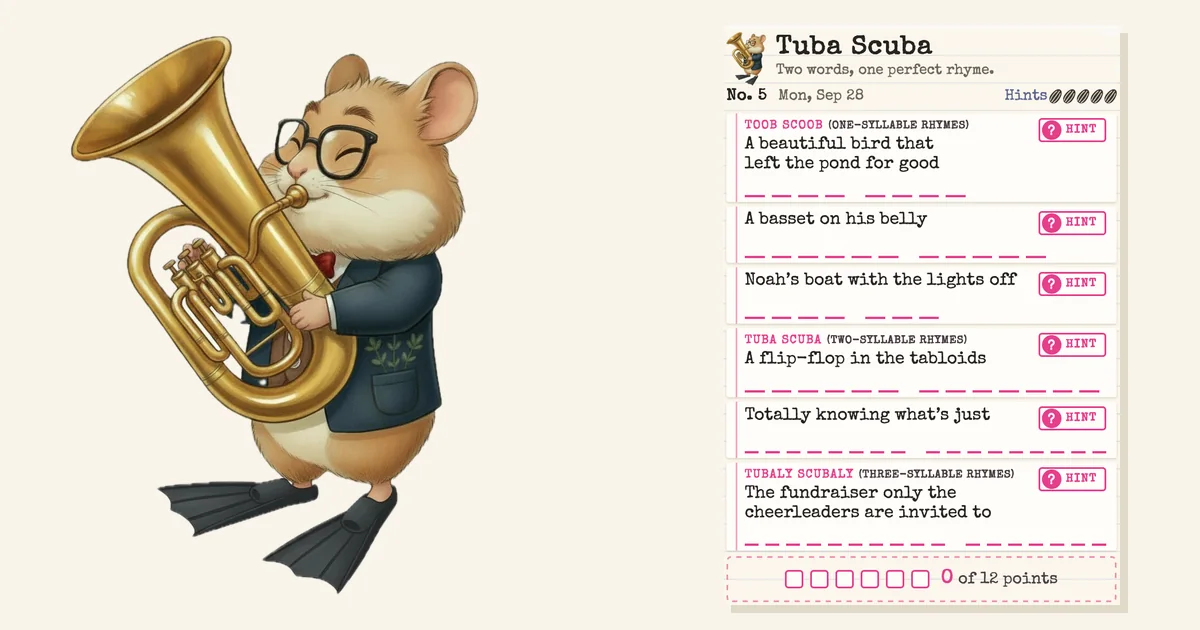
How to Play Tuba Scuba, the Daily Rhyme Puzzle
Tuba Scuba gives you six funny clues a day, and every answer is a rhyming pair. Learn how the hints, scoring and sister game Mission Ignition work.
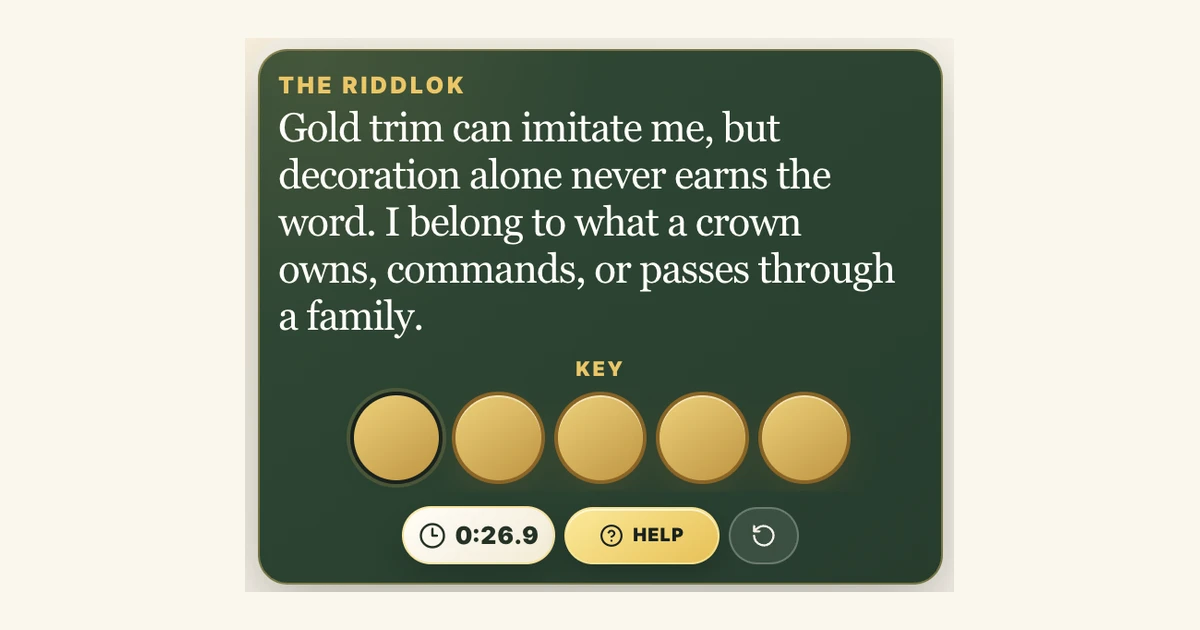
How to Play Riddlok - Exciting new puzzle game!
Riddlok is a free daily word puzzle with three routes to one answer — a riddle, a set of clues, and a hidden theme linking the clue answers.
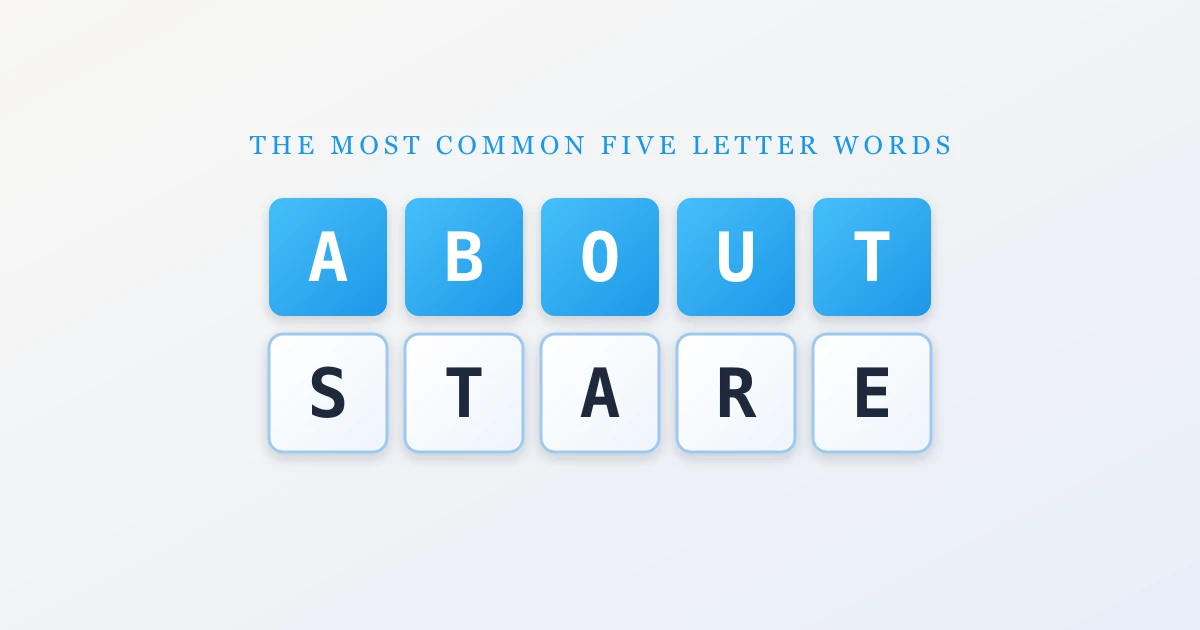
Most Common 5-Letter Words for Wordle and Word Games
A practical reference to the most common 5-letter words, organized by the patterns that matter in Wordle and word games — from a studio that builds them.